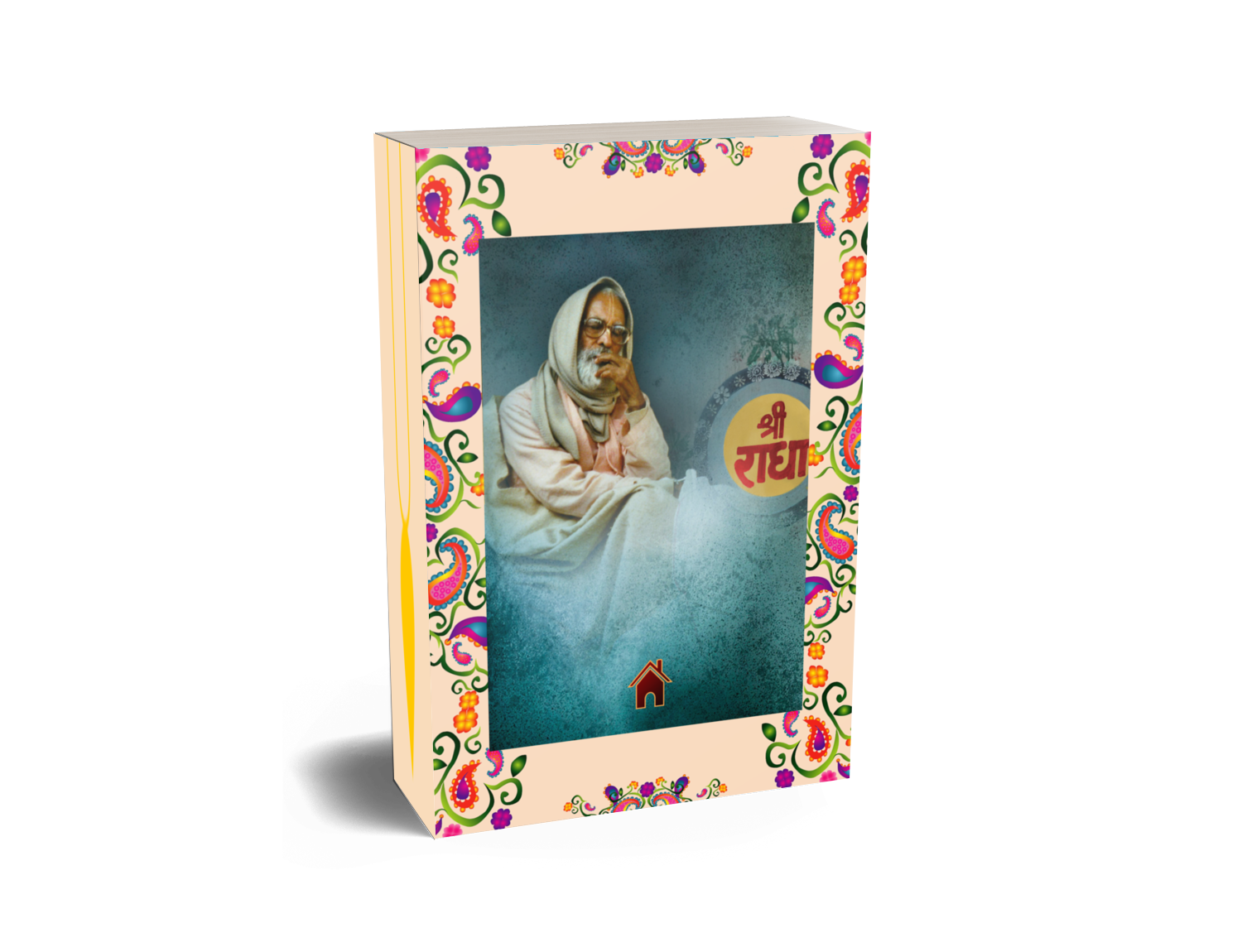
 The following is a transcription of a discourse delivered by Śrīla Bhaktivedānta Nārāyaṇa Mahārāja during the Navadvīpa parikramā in Māmagachī, Modadrumadvīpa, on March 21, 2005
Many devotees have glorified this wonderful transcendental place, Śrī Modadrumadvīpa. We should know that the pastimes which have taken place here have many important teachings for us.
The first teaching is the following:
This is the birthplace of Śrī Vṛndāvana dāsa Ṭhākura. Śrī Caitanya Mahāprabhu’s followers follow his teaching of:
tṛṇād api su-nīcena
taror iva sahiṣṇunā
amāninā māna-dena
kīrtanīyaḥ sadā hariḥ
Śrī Caitanya-caritāmṛta (Ādi-līlā 17.31)
[“One who thinks himself lower than the grass, who is more tolerant than a tree, and who does not expect personal honour yet is always prepared to give all respect to others can very easily always chant the holy name of the Lord.”]
One should be more humble than a blade of grass, more tolerant than a tree, and should give respect to  all others. So why is it that Śrī Vṛndāvana dāsa Ṭhākura has said, “If anyone will criticise or minimise Śrī Nityānanda Prabhu, I will take a stick and beat him on the head.” Is this the mood of tṛṇād api su-nīcena? Surely it is, because Śrī Nityānanda Prabhu is the Supreme Personality of Godhead and akhaṇḍa-guru-tattva (the complete principle of śrī guru). Vṛndāvana dāsa Ṭhākura is giving this teaching to us – if anyone will criticise the Supreme Lord, śrī guru or pure Vaiṣṇavas, what should you do? Should you be tolerant? No, you should cut out their tongue with a knife. “Cut” means to cut their arguments, and “knife” means knife-like sharp arguments from the scriptures. This means you should speak conclusive philosophy in such a way that they cannot give a reply. They should be left speechless. Pure devotees cut out the anarthas of the ignorant through their strong words from scripture. Vṛndāvana dāsa Ṭhākura says he will beat them with a stick. This also means strong preaching, leaving them beaten in their arguments and unable to continue their offences. If you cannot do that, you should cover your ears and quickly run and jump into the Ganges River fully clothed. Otherwise, a very dangerous reaction will come from the offence of hearing that blasphemy.
Rāvaṇa stole Śrīmatī Sītā-devī. Hanumān searched for her and finally went to Laṅkā. He wanted to personally take her to Lord Śrī Rāma, but she said, “No. You should inform Rāma, and he will come here and take me.” Hanumān then burned Laṅkā to the ground as a punishment to Rāvaṇa. He was extremely angry. He did not manifest the external attributes of the mood of tṛṇād api su-nīcena, but his mood was actually tṛṇād api su-nīcena. If you are on the level of Hanumān, you can do as he did; otherwise, preach, or leave that place.*
The second teaching is as follows:
Very close by here is the house of Śrī Sāraṅgadeva, a very powerful associate of Śrī Gaurāṅga. [Once, as Śrī 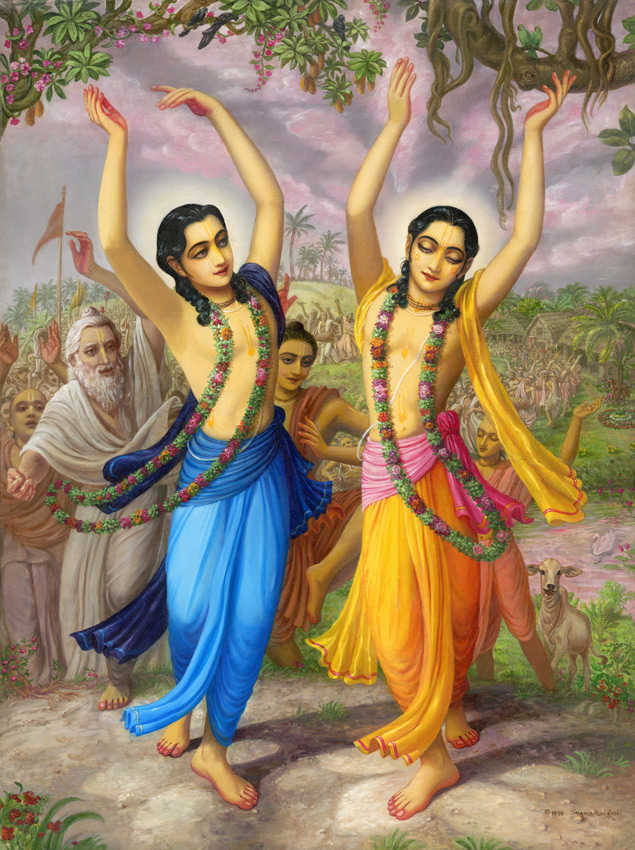 Gaurasundara was returning home with Śrīvāsa and Śrī Sāraṅgadeva, after having reprimanded Devānanda Paṇḍita, He turned to Sāraṅgadeva and asked, “Sāraṅgadeva, why don’t you accept a disciple? It must be an endeavour for you to do all the work in the āśrama, to serve the deities, and then to join Me in saṅkīrtana.” Sāraṅgadeva replied, “I cannot find a qualified disciple; therefore, I accept no one.” Mahāprabhu said, “Whomever you accept as a disciple will become qualified.” Sāraṅgadeva then agreed, “I will accept as a disciple the first person I meet tomorrow.” He then paid his obeisances to the Lord and returned to his āśrama. The next morning, Sāraṅgadeva got up and went to take a bath in the Gaṅgā. There he saw the dead body of a boy floating in the water. Remembering Mahāprabhu’s order, Sāraṅgadeva brought that dead boy to the riverbank and recited the dīkṣā-mantra into his ear. Astonishingly, when the mantra entered the boy’s ear, he returned to life. Paying his prostrated obeisances at Śrī Sāraṅgadeva’s feet, he said, “Yesterday, on the occasion of my sacred thread ceremony, I was bitten by a poisonous black snake. I don’t know what happened after that.” When the boy’s parents, relatives, and friends heard he was alive again, they came to the place of Śrī Sāraṅgadeva. They embraced the boy and said, “When you were bitten by that snake, no remedy could save you. Since the body of a person who has died of a snake bite cannot be burned, we placed you in the Gaṅgā, and by the mercy of Śrī Sāraṅgadeva, you have returned to life.” They wanted the boy, Murārī, to go home with them, but he would not go. That boy, who later became known as Śrī Murārī Ṭhākura, firmly vowed to spend his entire life in the service of Śrī Sāraṅgadeva. (Śrī Navadvīpa-dhāma and Other Prominent Holy Places of the Gauḍīya Vaiṣṇavas in Śrī Gauḍa-maṇḍala, 2nd Edition)]
At Śrī Sāraṅgadeva’s residence, there was a huge bakula tree. Even today, this ancient tree, which is completely hollow inside, stands as a witness to historic events.
This history is given to show the nature of guru-tattva. Sāraṅgadeva is the epitome of śrī guru, the ideal spiritual master, because when he gave the mantra to a dead body, that body came alive. Sad-gurus are so powerful. The living entities are like the dead in this material world, and by the power of the mantra, they can be brought to spiritual life. Sāraṅgadeva’s disciple Murārī was an ideal disciple. The disciple should know no one but his guru. These examples are to be followed.
The third teaching is as follows:
At the time of rāma-līlā, there was a huge banyan tree here, and Lakṣmaṇa built a hut here. This was a very  charming and attractive place. The Ganges was flowing nearby. There were many mango trees, and cuckoo birds were singing. Śrīmatī Sītā-devī and Śrī Rāmacandra were very pleased to be here. Lakṣmaṇa Prabhu made a cottage for them to stay in during the time of their exile. One day, Śrī Rāmacandra was meditating and smiling. Sītā-devī became curious and asked, “Why are you smiling?” Lord Rāma explained, “This place is extremely dear to me. In the future, in Kali-yuga, I will appear here as Śrī Caitanya Mahāprabhu. I will accept sannyāsa and leave my mother and wife weeping. My wife will weep in my mother’s arms.” Sītā-devī asked, “Why will you do this? What happiness is there in giving unhappiness to your wife and your mother?” Lord Rāma explained, “Prema has two aspects: sambhoga and vipramlambha, or meeting and separation. Without separation, the pleasure of meeting cannot be nourished. Unless meeting and separation both occur, it is not possible to relish the mellows of prema-rasa. In this pastime, I will leave you and send you to the forest, and we will be separated for the rest of our lives. I will make a golden deity of you and worship it.”
It is Lord Kṛṣṇa’s nature to reciprocate with His devotees’ love. Rāma then said, “Later, when I appear as Caitanya Mahāprabhu, instead of you going to the forest and I worshipping your golden deity, I will go to the forest and take sannyāsa, and you will be left behind and worship my deity. You will appear as Śrī Viṣṇupriyā and worship me.” This separation mood is very relishable.
Later, some time after Sītā, Rāma and Lakṣmaṇa returned to Ayodhyā, a resident there raised a doubt about Sītā’s 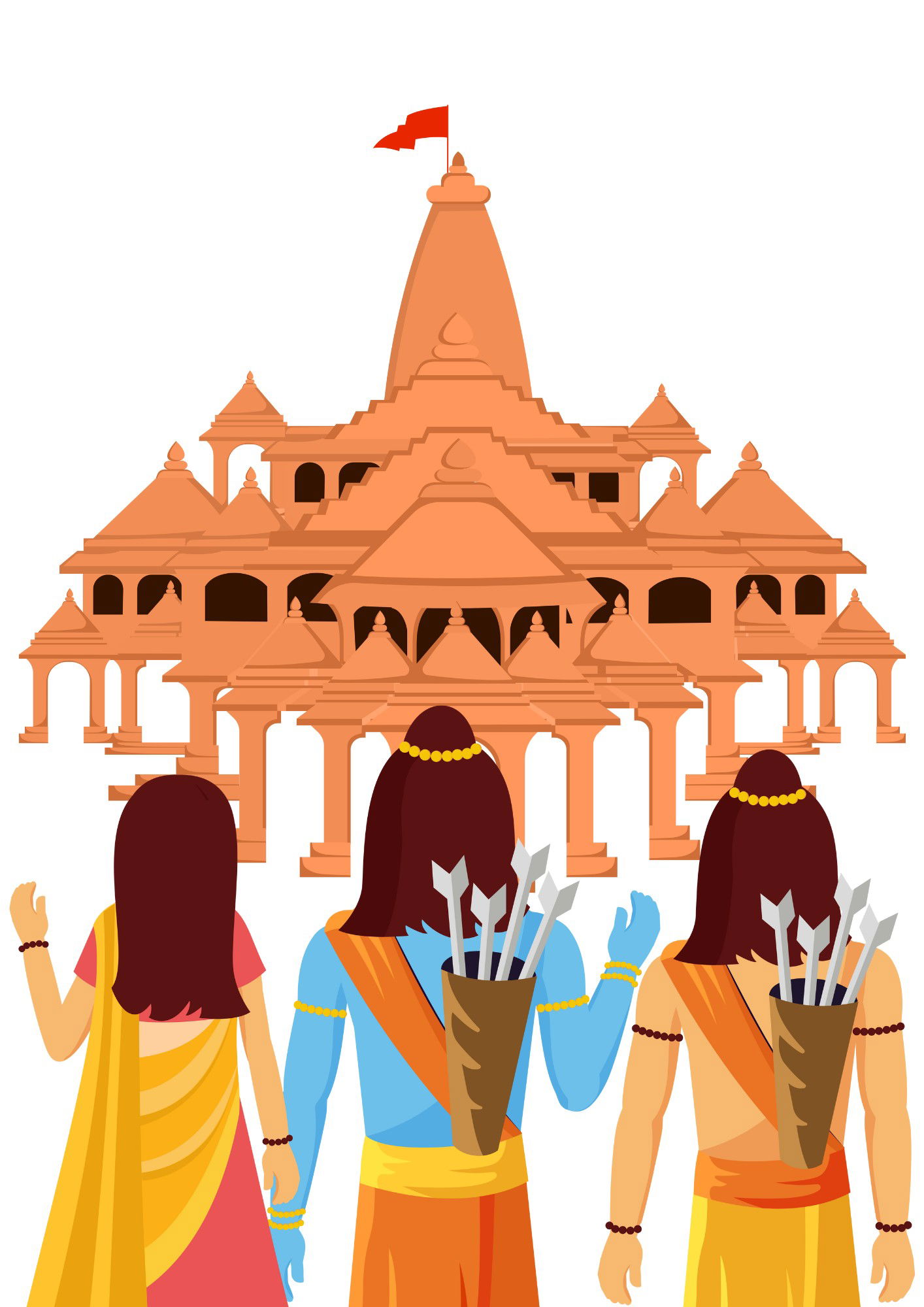 chastity – because she had stayed for so long without her husband in Laṅkā (the abode of Rāvaṇa). To set an example for the entire society, that even the wife of a king should be beyond others’ doubts, Lord Rāma asked Lakṣmaṇa to take Sītā to the āśrama of Vālmīki and leave her there. At that time, Sītā-devī was pregnant, and later she gave birth to two sons – Lava and Kuśa. Neither Lord Rāma nor the other residents of the palace saw them as they were growing up. They were staying with their mother at the āśrama of the sage Vālmīki, who taught them to sing the pastimes of Lord Rāma (Rāmāyaṇa) up to the part where Lord Rāma abandoned Sītā. Vālmīki taught them to sing in a wonderful way, with all bhāvas (transcendental emotions), laya (emotion-evoking ascending and descending scales), mūrchanā (high and low pitches) and all the various types of musical arts.
As Lava and Kuśa were growing up and learning the art of reciting the Rāmāyaṇa in that beautiful way, Lord Rāma was in Ayodhyā. He told his gurudeva, Vasiṣṭha Ṛṣi, “I want to perform a sacrifice.” Vasiṣṭha Ṛṣi replied, “It is impossible. A married person cannot perform a sacrifice in the absence of his wife. You will have to call back Sītā. Lord Rāma refused to accept this proposal. He asked, “Is there any other way?” Vasiṣṭha Ṛṣi replied that he should remarry, and he rejected that proposal as well. Then Vasiṣṭha said, “You should make a golden deity of Sītā, and in her company, you can perform the sacrifice. Lord Rāma then had a golden deity of Sītā made, which was so beautiful that it resembled her exactly. He installed the deity himself by the prāṇa-pratiṣṭha ceremony, and alongside that deity, he performed the sacrifice.
When Lava and Kuśa reached the age of about nine years, as brahmacārīs, they went to Naimiṣāraṇya (near Ayodhyā), where Lord Rāma was performing a Rājasūya sacrifice. At that time, they sang the Rāmāyaṇa in such a wonderful and pathetic way that everyone present was struck with wonder. Lord Rāma was weeping bitterly. Lakṣmaṇa, Bharata, Kauśalyā, Kaikeyī, Sugrīva, Vibhīṣaṇa, and everyone else who heard their recitation were awestruck. They thought, “If Rāma had sons, they would have been like this.” Weeping bitterly, they were tasting the mellows of separation.
When the boys finished their recitation, Lord Rāma told Lakṣmaṇa to reward them and inquire about their identity. Lakṣmaṇa approached and asked them, “O brahmacārīs, please accept this donation of gold coins in charity, and inform us who you are and who your mother and father are.” Those two very ideal brahmacārīs replied, “We live in the āśrama of Vālmīki Ṛṣi. There is very sweet water and so many flowering mango trees there. All the necessities we require are there. We have no need for gold coins. Also, we are the disciples of Vālmīki Ṛṣi, so if you ask who our mother and father are, this is against the principles of religion. According to 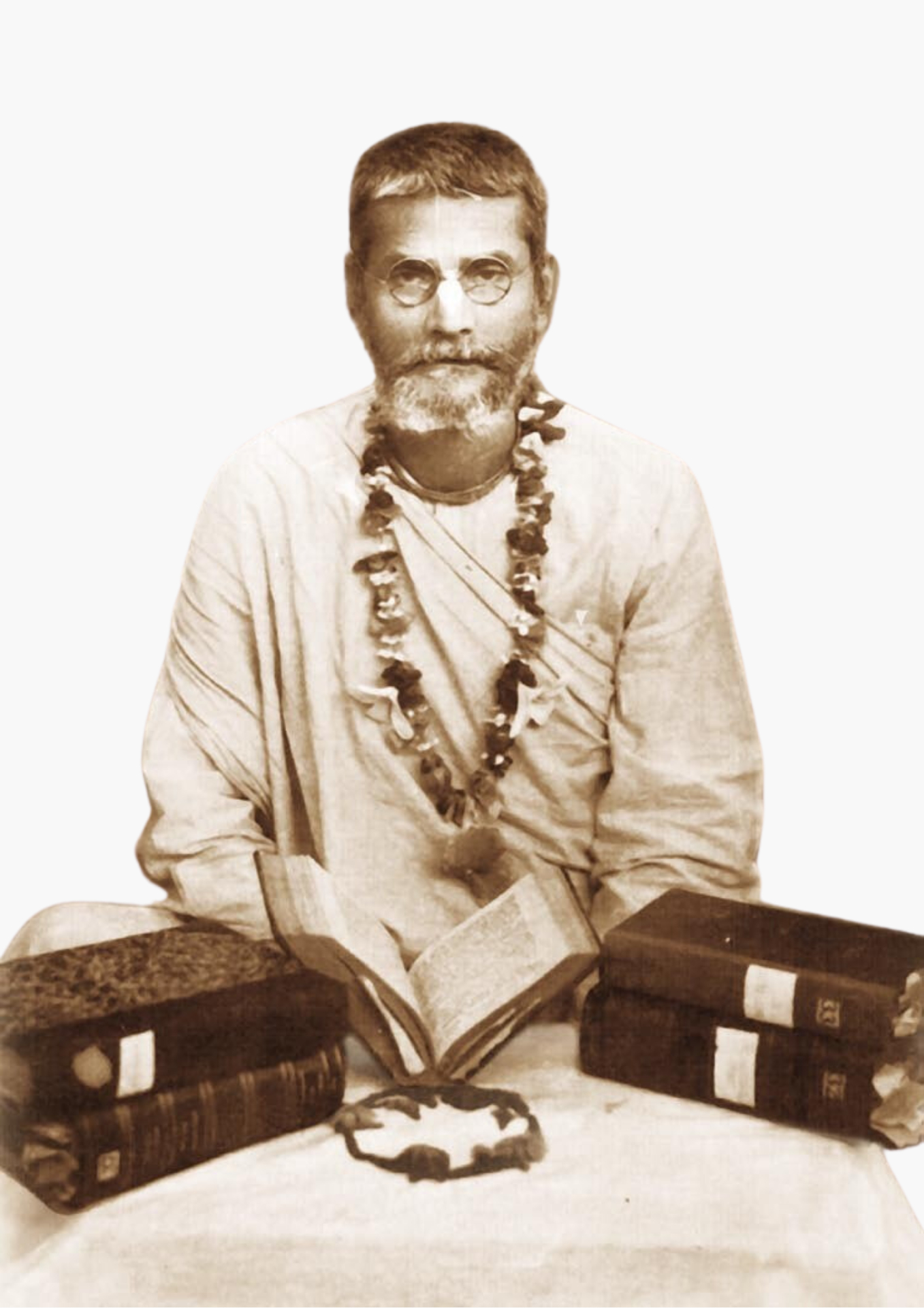 religious principles, the brahmacārī and sannyāsī have no material mother or father. The father is the guru, and the mother is the mantra. You should not ask this question.”
If someone asks me who my father is, I will say, “Śrīla Bhakti Prajñāna Keśava Gosvāmī Mahārāja.”
All were impressed by the boys’ perfect character. In the meantime, Sītā-devī was in her āśrama and wondering, “My sons have been gone for so many hours. Where are they? Why are they so late?” After some time, they returned, quite late at night, and Sītā-devī asked them, “Where have you been?” They answered, “We have seen something quite astonishing. We went to Naimiṣāraṇya, and there we saw a king performing a sacrifice. There was a golden deity sitting next to him that resembled you exactly. The only difference was that you spoke, and this deity did not speak.”
We can understand that Lava and Kuśa did not know that Lord Rāma was their father, or who their father was. When Sītā-devī heard these words from her two sons, she began to weep and thought to herself, “The King has abandoned the Queen, but Rāma has not abandoned Sītā.” Her two sons were looking at her, wondering, “Why is our mother crying?”
In the meantime, Lord Rāma could understand, “These two brahmacārīs are my sons.” He told Vasiṣṭha Ṛṣi, “Send for Sītā-devī and Lava and Kuśa. They should return here. Sītā-devī can perform some activity whereby all the citizens of Ayodhyā will have evidence that she is completely chaste.” Sītā-devī was sent for, and she entered the assembly, holding the hands of her two sons, one on each side, her face hanging down.
Lord Rāmacandra requested her, “I have no doubt about your chastity, but please do something so that the residents of Ayodhyā and everyone will know for all time that you are chaste. Sītā-devī prayed, “O Pṛthivī-devī (O my dear mother, Mother Earth), if in my life I have never remembered any other man, if I have never had any relationship with any man other than Lord Rāma, with my body, mind and words, then kindly accept me. Rāvaṇa touched me once, when I was helpless (Rāvaṇa had caught hold of Sītā as he was kidnapping her), but not after that.” As soon as Sītā-devī said these words, the earth opened up, and Pṛthivī-devī (the predominating goddess of the Earth) appeared there, sitting on a golden throne. She extended her arms and 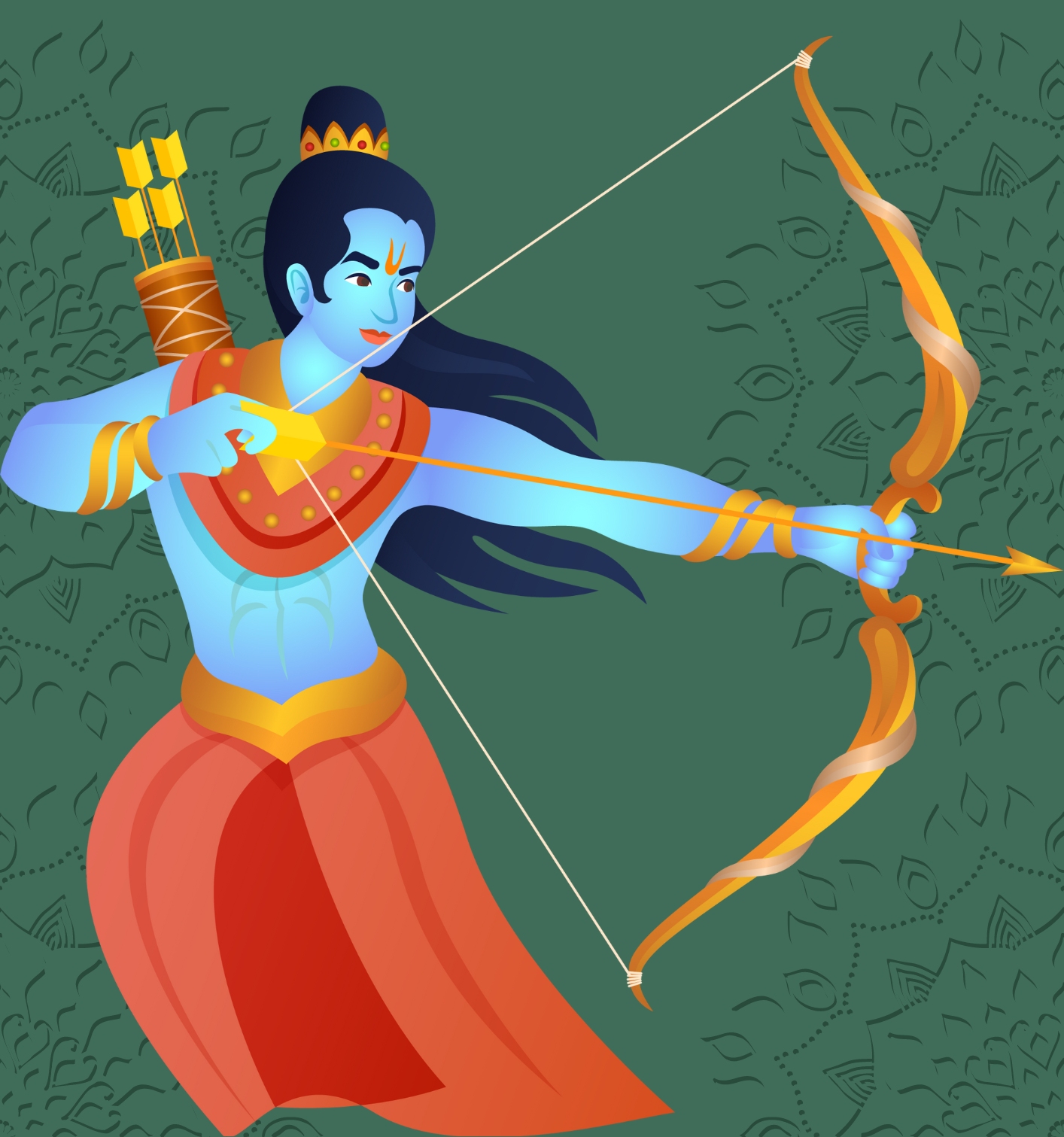 took Sītā-devī on her lap, and then that golden throne sank back into the earth. The earth closed, and Sītā-devī disappeared forever.
Lord Rāma became overwhelmed with separation. Weeping, he became like a mad person and forgot everything. He took his bow and arrow and aimed his arrows at the earth. He said, “Return my Sītā, or I will burn you to ashes.” Vālmīki Ṛṣi came forward and pacified Lord Rāma. He said, “I have written up to here, not further. Now is the time that your manifest pastimes in this world come to an end. Don’t be perturbed. You should know that Sītā-devī has returned to Sāketa-dhāma (the transcendental Ayodhyā in the spiritual sky), and she is waiting for you there. Now, wind up your pastimes and return to her there.” In this way, Lava and Kuśa became the kings and remained in this world, and Rāma left for the non-manifest Ayodhyā in the spiritual sky.
At a dramatic performance, devotees continually weep as they hear the nectar of these pastimes. Then, the next day, they return to hear the same pastimes again. If this is painful and separation is a bad thing, why do they hear such pastimes again and again? It is because there is great happiness in this separation.
Thus, when Lord Rāma again appeared here in Navadvīpa-dhāma in the golden form of Lord Gaurāṅga, He again went to the forest.
ye yathā māṁ prapadyante
tāṁs tathaiva bhajāmy aham
mama vartmānuvartante
manuṣyāḥ pārtha sarvaśaḥ
Bhagavad-gītā (4.11)
[“As all surrender unto Me, I reward them accordingly. Everyone follows My path in all respects, O son of Pṛthā.”]
Lord Śrī Kṛṣṇa promises to reciprocate with the love of His devotees. So in this incarnation, Śrī Caitanya Mahāprabhu went to the forest, and Viṣṇupriyā remained at home. He took sannyāsa, and in His absence, Viṣṇupriyā-devī made the deity of Lord Gaurāṅga and worshipped that form. That deity is present today, and we will have darśana of the deity when we perform nagara-saṅkīrtana in Navadvīpa town.
Śrī Sītā-Rāma kī jaya
Śrī Vṛndāvana dāsa Ṭhākura kī jaya
Śrīmatī Nārāyaṇī devī kī jaya
Sāraṅga-Murārī kī jaya
Gaura-premānande, Hari Haribol.
* We cannot stop anger altogether, but if we simply become angry with those who blaspheme the Lord or the devotees of the Lord, we control our anger in Kṛṣṇa consciousness. Lord Caitanya Mahäprabhu became angry with the miscreant brothers Jagāi and Mādhāi, who blasphemed and struck Nityānanda Prabhu. In His Śikṣāṣṭakam, Lord Caitanya wrote, tṛṇād api su-nīcena taror iva sahiṣṇunā: “One should be humbler than the grass and more tolerant than the tree.” One may then ask why the Lord exhibited His anger. The point is that one should be ready to tolerate all insults to one’s own self, but when Kṛṣṇa or His pure devotee is blasphemed, a genuine devotee becomes angry and acts like fire against the offenders. Krodha (anger) cannot be stopped, but it can be applied rightly. It was in anger that Hanumān set fire to Laṅkā, but he is worshipped as the greatest devotee of Lord Rāmacandra. This means that he utilised his anger in the right way.
Source: Purebhakti.com
Image(s) made possible by Pixabay.com, Krishnapath.org.in, Keystone Press / Alamy Stock Photo and / or Bhaktiart.net
Unless indicated otherwise, all verse translations and quotes are from the books by Śrīla Prabhupāda (Vedabase.com)