 The following is a transcription of a discourse on Śrīla Viśvanātha Cakravartī Ṭhākura’s Śrī Prema-sampuṭa delivered by Śrīla Bhaktivedānta Nārāyaṇa Mahārāja in Vṛndāvana, India, on October 18, 2005
The book Śrī Prema-sampuṭa is very exalted; the moods expressed in it cannot be understood by ordinary 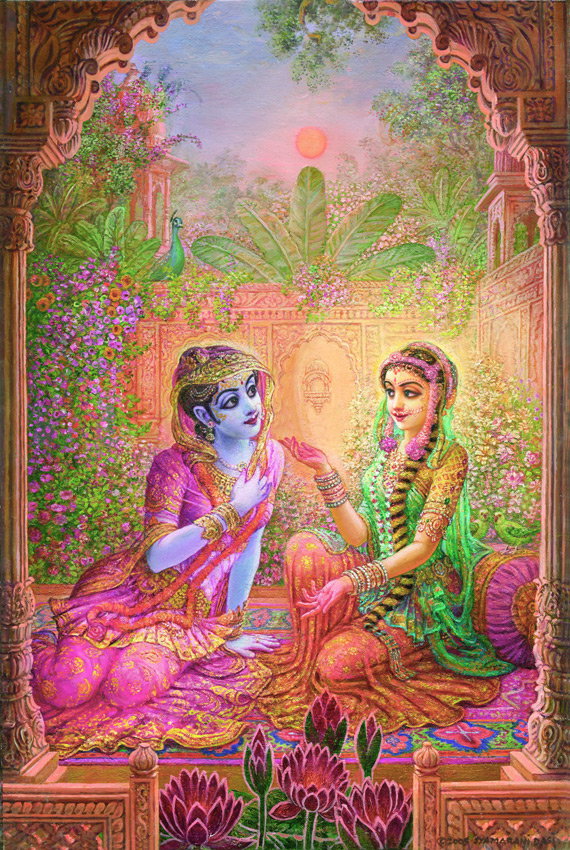 persons. I will therefore complete it quickly and then begin discussing the book Mādhurya-kādambinī, which explains the gradual development of devotional service.
We have heard how Śrīmatī Rādhikā is discussing the truth of prema-tattva to Śrī Kṛṣṇa, who has disguised Himself as a damsel from the heavenly planets.
Śrīmatī Rādhikā told the demigoddess-disguised Kṛṣṇa, “Prema is ‘sva-saṁvedya-daśā.’ This means it can only be understood by the person experiencing it, not by another. Prema cannot be described in words; it can be understood only through realisation, and nothing else. Only one into whose heart prema has appeared can understand what it is. Another person cannot understand it. Prema cannot be understood by much deliberation, nor can it be understood by an absence of deliberation. Either way, it cannot be understood. On the other hand, unless we deliberate and endeavour to please Kṛṣṇa, prema will not come.
That desire or tendency – “How can I please Kṛṣṇa?” – is the symptom of prema. We may understand that someone has achieved prema by looking at one’s various ecstatic emotions, such as vyabhicārī, aṣṭa-sāttvika-bhāva, and so on. These symptoms must be seen in the heart in which prema has appeared.
Śrīmatī Rādhikā continued, “You have described Kṛṣṇa as being a debauchee, but really, He is the topmost hero or lover (nāyaka). He alone has the qualification to love many heroines or beloved ladies (nāyikās). The moods seen in Kṛṣṇa cannot be seen in any other great personality. Even when He performs apparently abominable pastimes such as going to Candrāvalī and other beloveds, still, in  that condition, He only remembers the happiness that He experienced when He was with Me.
“When I weep in separation from Kṛṣṇa, all the plants and animals of Vṛndāvana also weep. Kṛṣṇa performs pastimes of being with rival gopīs only to show the world what prema is. This is why Kṛṣṇa leaves Me and goes to other heroines.
“When a beloved meets with Kṛṣṇa, all the greatest happiness of this world multiplied millions of times does not equal one drop of the happiness I experience in association with Kṛṣṇa. Similarly, all the unhappiness of the world multiplied millions of times cannot be equal to one drop of the unhappiness I experience in His separation.”
The qualities of Lord Śrī Kṛṣṇa can only be seen in Him, not in Rāma or Nārāyaṇa. They have the self- conception, “I am God,” and there is great opulence in their intrinsic nature. They come here to protect religion and to destroy irreligion. They have many duties, preoccupations, and responsibilities. On the other hand, Śrī Kṛṣṇa has no responsibilities or duties. He only moves the cows from one place to another. He has no worries or responsibilities; He is completely carefree. Therefore, He alone can perform such activities with the gopīs, and there is no fault with Him in this regard. It is His quality.
Even Śrī Kṛṣṇa in Dvārakā has many responsibilities, such as killing demons, whereas Kṛṣṇa in Vṛndāvana never kills any demons. It is Lord Viṣṇu, situated within the body of Kṛṣṇa, who kills them.
As Kṛṣṇa is unique, so are the gopīs of Vraja. Only they can have such unprecedented prema towards Kṛṣṇa as to be able to control Him as they do. Even the queens in Dvārakā cannot control Kṛṣṇa completely, because they also have other responsibilities, such as caring for their children and taking care of household duties. The gopīs, on the other hand, have left everything – all shyness, chastity, worldly responsibilities, fear of society, and fear of scriptural injunctions. They have given up everything for the happiness of Kṛṣṇa. They have no children – they have nothing but Kṛṣṇa. They have husbands, but they have no responsibility or attachment to them.
Śrīmatī Rādhikā continued speaking to Śrī Kṛṣṇa, who was disguised as a lady from a heavenly planet. She said, “If any gopī tells another, ‘Let’s go. Take me to meet Kṛṣṇa. I want to see Him,’ this is not lust – because everything they do is for the happiness of Kṛṣṇa, not for their own happiness.* The attraction of the gopīs towards Kṛṣṇa is not lust; it is prema.
“Kṛṣṇa is an ocean of prema. He has so many apparent disqualifications, such as restlessness, cruelty and thoughtlessness, and He is unreliable – but these are actually His good qualities. If He did not manifest these “disqualifications,” the ever-increasing new tastes of My loving relationship with Him (nava-nava rasa) would not have been able to reach their height. If anyone thinks Kṛṣṇa’s qualities are His faults, that person has no prema. The so-called faults of Kṛṣṇa are not faults, but qualities.”
One example of Śrīmatī Rādhikā’s statement is as follows: Kṛṣṇa has arranged to meet Her, but on the 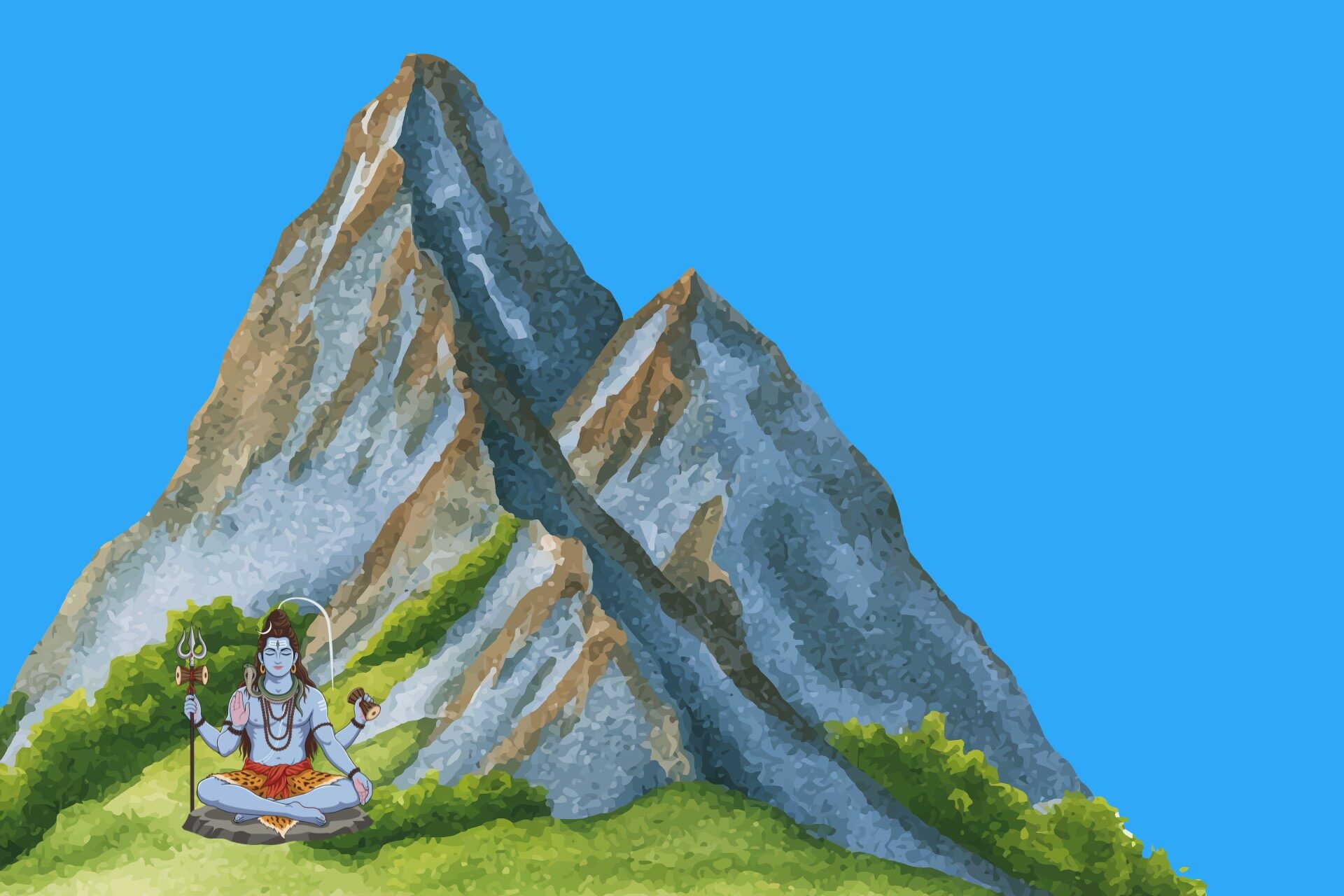 way, He meets another gopī, such as Candrāvalī or Śaibya. Śrīmatī Rādhikā is waiting the entire night, lamenting for Kṛṣṇa. Kṛṣṇa comes to Her early in the morning, looking like Nīlalohita Mahādeva (Lord Śiva who has a mixed blue-and-red appearance), because His eyes are very red. Śrīmatī Rādhikā asks Him, “Where have you been?” Lying, Kṛṣṇa replies, “I came directly here; I have not come after being with anyone else.” Śrīmatī Rādhikā’s unhappiness then increases, so much so that, despite Her meeting with Kṛṣṇa, She feels more separation. She then enters the state of māna (transcendental sulky mood) and calls Him by ill names.
Śrīmatī Rādhikā continued speaking to the disguised Kṛṣṇa, explaining Her own mind, “I become angry thinking, ‘Why did He go there?’ I know that if He goes to any other gopī, He cannot experience the happiness He attains in My association. The anger I display is a manifestation of prema because I know that He cannot experience full happiness when He goes to another gopī. Kṛṣṇa then says to Me, ‘Yes, yes, I also know that.’
“Kṛṣṇa is self-satisfied and has no unfulfilled desires. He is never controlled by lusty desires. He is controlled only by pure prema. Only the gopīs of Vṛndāvana can control Him – no one else can do so. When He is late in coming to meet Me because of some disturbance caused by other gopīs, I become angry because I see His dissatisfaction and lack of fulfilment. I become unhappy and angry that He hasn’t tasted full happiness. My anger is only for His happiness.
“I tell Him, ‘If You experienced so much happiness with that other gopī, then go back to her.’
“When Kṛṣṇa comes to Me with marks on His body from associating with other gopīs, I become angry and say to Him, ‘You characterless person, get away from here and go back to that other gopī.’ Then, in front of Me, Kṛṣṇa admits all His faults.
“Why does He act the way He does? Prema is like a lamp, revealing the innermost intentions of both  the hero and the heroine. Their hearts are revealed by the lamp of prema. If prema is spoken, that is, if the lover and beloved say, ‘I love you,’ then prema is lost. Prema can be compared with camphor. If camphor is placed near an open window, its aroma evaporates.
“Kṛṣṇa tells the other gopīs, ‘You are My most beloved. Apart from you, I do not love anyone else.’ Kṛṣṇa does not say this to only one gopī, but to all the gopīs, including Me. Why does He do this? This is not His fault. All the gopīs have great attachment (anurāga) for Him. Each gopī has controlled Him to the extent of the anurāga she possesses. Kṛṣṇa’s meeting with them is not His fault, but His quality. Each gopī captures Him according to her bhakti.
“Another doubt may come. If prema is not spoken, then how is it that sometimes the gopīs reveal their prema to Kṛṣṇa?
yat te sujāta-caraṇāmburuhaṁ staneṣu
bhītāḥ śanaiḥ priya dadhīmahi karkaśeṣu
tenāṭavīm aṭasi tad vyathate na kiṁ svit
kūrpādibhir bhramati dhīr bhavad-āyuṣāṁ naḥ
Śrīmad-Bhāgavatam (10.31.19)
[“O dearly beloved! Your lotus feet are so soft that we place them gently on our breasts, fearing that Your feet will be hurt. Our life rests only in You. Our minds, therefore, are filled with anxiety that Your tender feet might be wounded by pebbles as You roam about on the forest path.”]
“The gopīs expressed themselves to Kṛṣṇa, ‘Oh Kṛṣṇa, we are not satisfied to meditate on Your lotus feet. Rather, we want You to place them on our breasts. Although we are fearful when Your feet come directly upon our breasts, because our breasts are very hard, at the same time we know that you are satisfied.’ The gopīs expressed their prema, so is the prema of the gopīs not being dissipated by expressing their heart?**
Śrīmatī Rādhikā continued, “No, this is not a fault in the prema of the gopīs. In their case, it is simply a symptom of their prema. Their prema can never be diminished or destroyed.
“Listen; I’ll give you an example from My own life. Kṛṣṇa performed the rāsa dance with the gopīs, and left everyone for Me. Why? He is an ocean of prema. At that time, all the gopīs were thinking, ‘We are the topmost.’ Kṛṣṇa did not want them to think like this, and therefore He took Me away. It is not a fault of Kṛṣṇa that He took Me away from all the gopīs and sat Me on the throne of greatness, giving Me so much honour and position.
“At that time We went to Śṛṅgāra-vaṭa, and there He personally decorated Me. At that time, I was svādhīna-bhartṛkā (a heroine or beloved who has controlled Kṛṣṇa completely). At that time, Kṛṣṇa had no consideration or thought of any other gopī whatsoever. As for Myself, however, I was thinking, ‘My sakhīs have given their life and soul for My service. How can I alone drink His nectarean association? How can I drink this ocean of prema alone, without My friends? I would be afflicted by the fault of ungratefulness.’
“I could not tolerate the idea of having this fault. I therefore told Kṛṣṇa, ‘I cannot walk anymore. You can carry Me wherever You like.’ ”
Śrīmatī Rādhikā desired that all Her sakhīs would be able to taste the happiness of Her association with Kṛṣṇa.
Śrī Kṛṣṇa is rasika-śekhara, the crest-jewel of heroes, and He could therefore understand the mind of Śrīmatī Rādhikā. He thought, “Alone, Rādhikā cannot be happy with Me. She will be happy if Her sakhīs can meet Her and Me there. But if all the other gopīs find Me alone with Her, they will become envious and angry.”
Śrī Kṛṣṇa was referring to the vipakṣa and taṭasthā gopīs (those gopīs who are opposed and neutral to Śrīmatī Rādhikā), and Rādhikā was referring to Her svapakṣa sakhīs (those gopīs who are in Her party and who only desire Her happiness).
At that time He considered, “They will all return to their homes out of anger, and there will be no rāsa dance. My desire will not be fulfilled, nor will the desire of Śrīmatī Rādhikā or any other gopī; we will all be cheated of rāsa-līlā.”
Now at Her home in Yāvaṭa, Śrīmatī Rādhārāṇī continued speaking to Kṛṣṇa disguised as a heavenly damsel, “What is the necessity of rāsa-līlā? Kṛṣṇa desired it, and therefore He called all the gopīs with His flute music. So He considered, ‘I will leave Rādhārāṇī for a moment. During that time, when all the other gopīs come and see Her condition, they will weep and feel great sympathy for Her. Then, when I return, there will be rāsa-līlā. My desire will be fulfilled, Rādhārāṇī’s desire will be fulfilled, and everyone’s desire will be fulfilled.’ That is why Kṛṣṇa’s leaving Me during rāsa-līlā is not a fault of His, but a quality.
(Śrīla Bhaktivedānta Nārāyaṇa Mahārāja pauses the topic of Śrī Prema-sampuṭa and requests Śrīpāda Muni Mahārāja to sing a few verses from Śrī Gīta-govinda, and then he explains  one verse.) It was morning. Śrī Kṛṣṇa was late for His meeting with Śrīmatī Rādhikā, and She had become sulky. She told Him with some sarcasm, “Oh Kṛṣṇa, You are so beautiful. By Your sidelong glance, You can take the hearts of all gopīs. Oh Mādhava, Oh Keśava, this is really so.” She addressed Him by two of His names – Mādhava and Keśava. [Mādhava means Husband of the Goddess of Fortune. Keśava means one who has beautiful, wavy hair, or one who decorated the beautiful hair of Śrīmatī Rādhikā.] She told Him, “Oh, You who previously decorated My hair – that very Keśava. Oh Mādhava, beloved of all – not only Lakṣmī. You should at once go away. Don’t tell lies. I know everything, for Your body is telling everything. You should go to that gopī who can take away all Your disease of kāma (transcendental lust). Why have You come to Me? Oh, I see you didn’t sleep all night. Your eyes tell this because they are reddish. And You look somewhat drowsy.”
(Śrīla Bhaktivedānta Nārāyaṇa Mahārāja now resumes the topic of Śrī Prema-sampuṭa.) You should hear this – that which you have never heard before in your life, and that which you may never hear for the rest of your life. Hear this very patiently. Then, making this the object of your life, come down from there to śraddhā (initial faith) and niṣṭha (steadiness in the devotional process). Starting the day after tomorrow, I will tell you how to achieve this object.
Why did Kṛṣṇa disappear from the rāsa dance? He could understand that all the gopīs had a false conception of themselves, thinking that they were as qualified and fortunate as Śrīmatī Rādhikā. Śrīmatī Rādhikā also had an angry mood – a sulky mood towards Kṛṣṇa. She was thinking, “Why is He treating Me the same as the others?”
Therefore, in order to break the false pride of the other gopīs, and to please Rādhikā and break Her sulky mood, Kṛṣṇa left the rāsa arena. He wanted to show the world that Rādhikā is the topmost gopī. If He had not disappeared, how would the world come to know this? Kṛṣṇa showed, “Among everyone, only Śrīmatī Rādhikā can completely fulfil My desire.”
Tomorrow we will go to Sevā-kuñja, the place where Lord Śrī Kṛṣṇa performed the pastime of breaking Rādhikā’s sulky mood. Then we will go to Śṛṅgāra-vaṭa, where He pacified Her by decorating Her. Then, finally, we will go to Dhīra-samīra, the place of rāsa-līlā.
Thus, as explained by Śrīmatī Rādhikā, through Śrī Kṛṣṇa’s pastime of disappearing, all the other gopīs could understand that Her prema is the highest.
Now the disguised Kṛṣṇa criticised Himself by saying, “Kṛṣṇa is a very bad person. He killed a lady, He killed a cow, He killed a calf, and He killed an innocent snake.”
Śrīmatī Rādhikā replied, “No, it is not like that. Ariṣṭāsura looked like a bull, but he was not a bull; he was a demon in disguise. Bakāsura was not a crane but a demon, and the snake Aghāsura was sin personified. Vatsāsura was not an innocent calf; he was also a demon, and Pūtanā was a man-eating witch. In order to protect saintly persons, Lord Viṣṇu entered the body of Kṛṣṇa and killed those demons. Kṛṣṇa Himself never killed anyone.
Hearing this, the disguised Kṛṣṇa became astonished and said, “Oh Rādhārāṇī, the symptoms of prema described by You are present completely in You alone. I couldn’t understand any of this before, but now I can. To the beloved, the faults of the lover are not faults; they are simply qualities.”
*
ātmendriya-prīti-vāñchā — tāre bali ‘kāma’
kṛṣṇendriya-prīti-icchā dhare ‘prema’ nāma
Śrī Caitanya-caritāmṛta (Ādi-līlā 4.165)
[“The desire to gratify one’s own senses is kāma (lust), but the desire to please the senses of Lord Kṛṣṇa is prema (love).”]
**
gopya ūcuḥ
jayati te ’dhikaṁ janmanā vrajaḥ
śrayata indirā śaśvad atra hi
dayita dṛśyatāṁ dikṣu tāvakās
tvayi dhṛtāsavas tvāṁ vicinvate
Śrīmad-Bhāgavatam (10.31.1)
[“(The gopīs said:) ‘O beloved, Your birth in the land of Vraja has made it exceedingly glorious, and thus Indirā, the goddess of fortune, always resides here. It is only for Your sake that we, Your devoted servants, maintain our lives. We have been searching everywhere for You, so please show Yourself to us.’ ”]
yat te sujāta-caraṇāmburuhaṁ staneṣu
bhītāḥ śanaiḥ priya dadhīmahi karkaśeṣu
tenāṭavīm aṭasi tad vyathate na kiṁ svit
kūrpādibhir bhramati dhīr bhavad-āyuṣāṁ naḥ
Śrīmad-Bhāgavatam (10.31.19)
[“O dearly beloved! Your lotus feet are so soft that we place them gently on our breasts, fearing that Your feet will be hurt. Our life rests only in You. Our minds, therefore, are filled with anxiety that Your tender feet might be wounded by pebbles as You roam about on the forest path.”]
Excerpt from Śrīla Bhaktivedānta Nārāyaṇa Mahārāja’s commentary on verse 19 of Gopī–gīta (Śrīmad-Bhāgavatam 10.31.19): The gopīs weep while singing their very sweet songs. Yat te sujāta-caraṇāmburuhaṁ staneṣu. “Oh, we very carefully and gently hold Your lotus feet on our heart.”
“Why your heart?” Kṛṣṇa asks.
“Because this is the best part of our entire body. If someone has something valuable, he wants to keep it on his heart.”
Kṛṣṇa is the life of their life. Dhṛtāsavas in the first śloka and bhavad-āyuṣāṁ in the last means, “You are our life. Every part of You is our life. Your feet are our life, Your face is our life, Your hands, head, and everything about you is our life. We want to keep our life in our heart, and we want to serve it very gently.
“You run here and there on the rough paths in Vṛndāvana, full of pebbles, thorns and stone chips.”
Śrīla Jīva Gosvāmī explains that there is no need for anxiety because Vṛnda-devī has arranged that there are actually no thorns or pebbles. Nothing is wrong. Vṛndāvana is not a desert or hilly place; it has very gentle terrain. However, it is the nature of any lover that out of concern for her beloved, she does not acknowledge this.
Kṛṣṇa may ask, “Why are you worried about My walking in the forest of Vṛndāvana?” The gopīs reply, “Your lotus feet are so soft – softer than any lotus. We have realised this. We keep Your feet in our hands and take them on our very soft breasts. But when we compare the two, we see that Your lotus feet are a million times more gentle, sweet, and soft than our breasts. Our breasts are not rough and hard like the pebbles and thorns in the forest, yet in comparison to Your lotus feet, they are not very soft. We therefore hold Your feet there very gently and carefully, so that You will have no pain.”
Kṛṣṇa says, “If you know that in comparison to My feet your breasts are rough, why do you try to keep them there?”
“Oh beloved, we know that if we keep them on our breasts, You will feel great bliss. We are unhappy to do this. However, knowing that You are receiving pleasure, we forget our suffering, and we are also immersed in an ocean of happiness. If we see You get a little pleasure in our behaviour or by anything else we do or say, we become filled with ever-increasing happiness.”
Source: Purebhakti.com
Image(s) made possible by Pixabay.com, Krishnapath.org.in, Keystone Press / Alamy Stock Photo and / or Bhaktiart.net
Unless indicated otherwise, all verse translations and quotes are from the books by Śrīla Prabhupāda (Vedabase.com)