 The following is a transcription of a discourse delivered by Śrīla Bhaktivedānta Nārāyaṇa Mahārāja in France on July 2, 2002 (Bhakta Bandhav Anthology Volume 88)
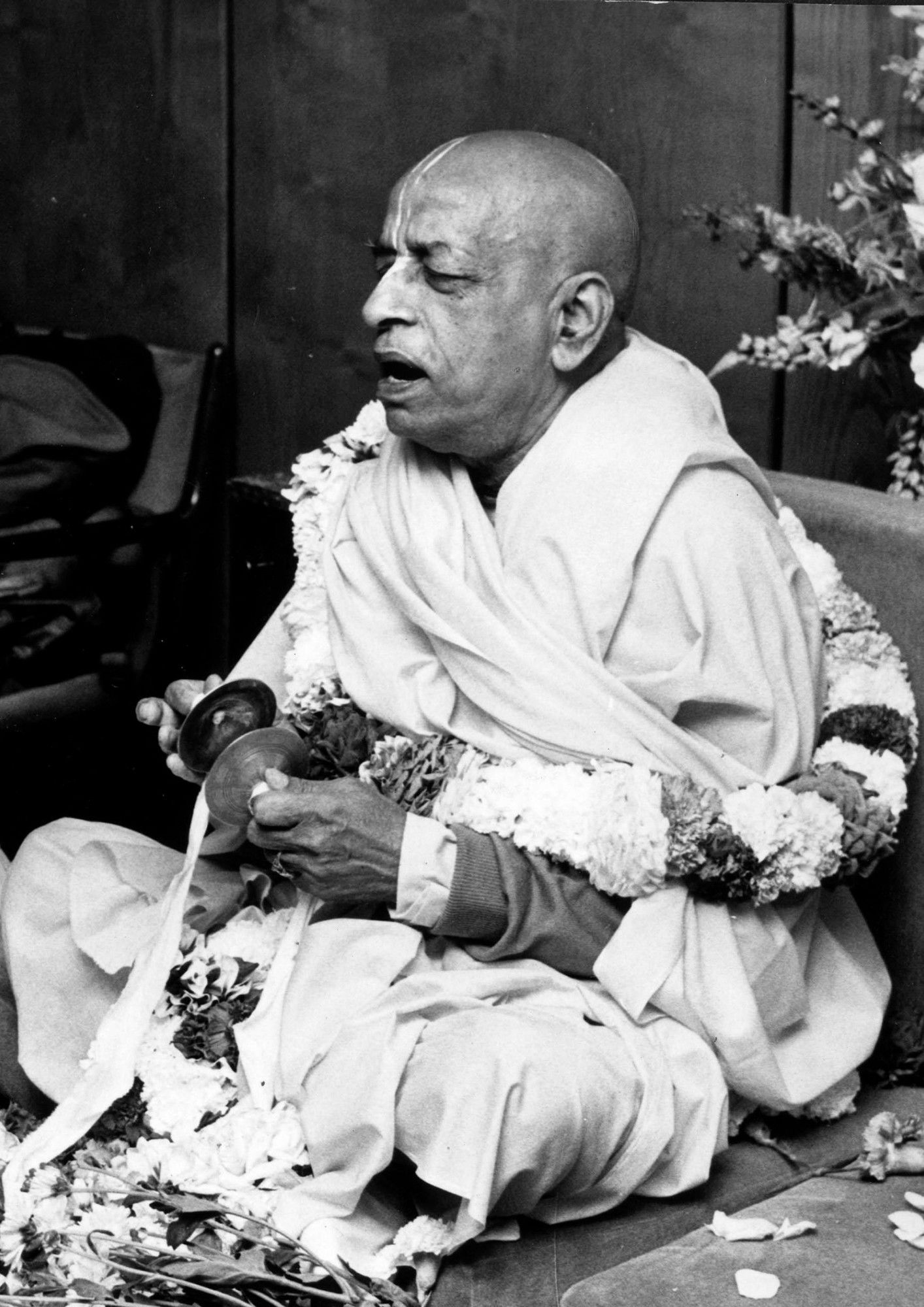
Śrīla Bhaktivedānta Nārāyaṇa Mahārāja: My millions of humble obeisances unto the lotus feet of my paramārādhya śrīla guru-pāda-padma, Śrī Śrīmad Bhakti Prajñāna Keśava Gosvāmī Mahārāja, and also, many millions of humble obeisances unto the lotus feet of my śikṣā-guru, oṁ viṣṇupāda Śrī Śrīmad Bhaktivedānta Svāmī Mahārāja.
Sent by his gurudeva, Śrīla Bhaktisiddhānta Sarasvatī Gosvāmī Ṭhākura, Svāmījī (Śrīla Bhaktivedānta Svāmī Mahārāja) travelled to Western and Eastern countries. He was so merciful that, even in his old age, he travelled to America aboard a ship from Scindia Navigation. He was about to die, yet he still dared to come. There was no one; he was sitting alone in the garden of Tompkins Square Park; he was chanting (performing kīrtana):
śrī-kṛṣṇa-caitanya prabhu-nityānanda
śrī-advaita gadādhara śrīvāsādi-gaura-bhakta-vṛnda
[“All glories to Śrī Caitanya Mahāprabhu, Śrī Nityānanda Prabhu, Śrī Advaita Prabhu, Śrī Gadādhara Prabhu, Śrīvāsa Ṭhākura, and all the devotees of Gaura.”]
Hare Kṛṣṇa Hare Kṛṣṇa Kṛṣṇa Kṛṣṇa Hare Hare
Hare Rāma Hare Rāma Rāma Rāma Hare Hare
He soon attracted many devotees and established numerous preaching centres 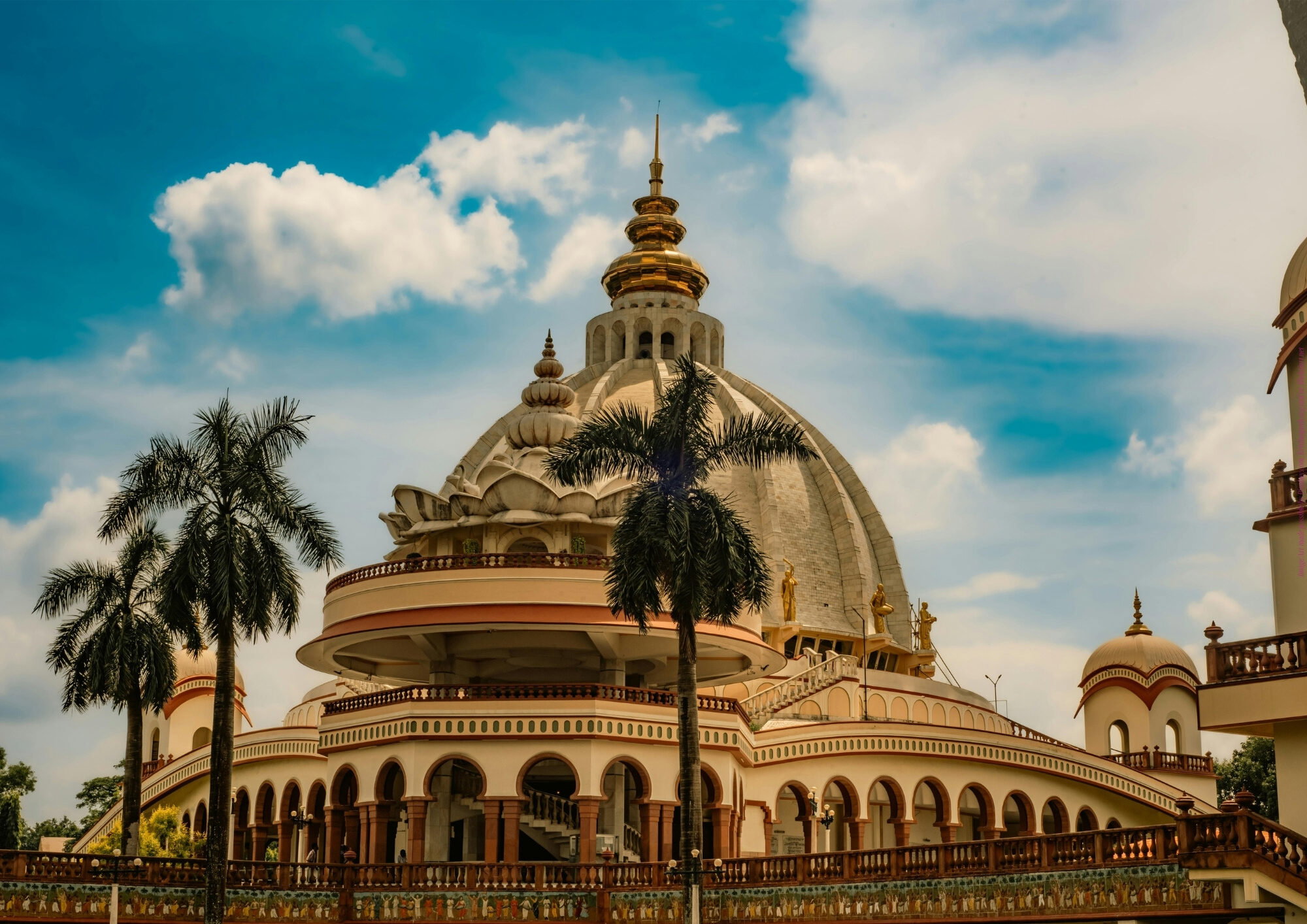 worldwide. He preached everywhere — among mountains and seas, oceans, in forests — everywhere. How wonderful! It is only due to his mercy that you are all here, chanting and remembering.
You should know the object of Svāmījī’s preaching. Kṛṣṇa and His associates are all worried. “These parts and parcels of the Supreme Lord, by their constitutional position, are all eternal servants of Kṛṣṇa. But now they have been suffering since unlimited time.” That is why sometimes He descends to this world Himself, and sometimes He orders His associates to come down into this world.
Thus, through the guru-paramparā, this mission continues. What was their mission? They  never came from India for money or for any position. They came only to preach this mission of life, the object of life, that you are not this body. You are the soul, the part and parcel of God. You cannot be happy here in this world. There are so many problems and sufferings of life here. You should chant and remember Kṛṣṇa. Especially in this Iron Age, no one is happy. Especially with money, no one is happy. Only love and affection for Kṛṣṇa can make you happy, and this is the object of life.
When the vraja-līlā of Kṛṣṇa ended, Kṛṣṇa disappeared from this world. He was in the spiritual world, and He was thinking, “I descended to the material world, and I tasted especially śānta-rasa, dāsya, sakhya, vātsalya, and mādhurya. I have given this thing once before, but now it has been a long time, one day of Brahmā since I have distributed this love and affection in this world. I want all the living entities of the whole world to realise this thing: the high-class of love and affection like sakhya, vātsalya, and especially mādhurya-rasa.”
Bhakti had been given by so many, like Rāmānujācārya, Madhvācārya, Viṣṇusvāmī, Nimbāditya, and, especially, some semblance of rasa was given by Jayadeva Gosvāmī, Vidyāpati, Caṇḍīdāsa, and Bilvamaṅgala Ṭhākura — but not abundantly. Especially Kṛṣṇa is wonderfully merciful, causelessly merciful, and He is the ocean of rasa. He wanted to donate this special kind of gopī-prema to all, and by that, He wanted the whole universe to 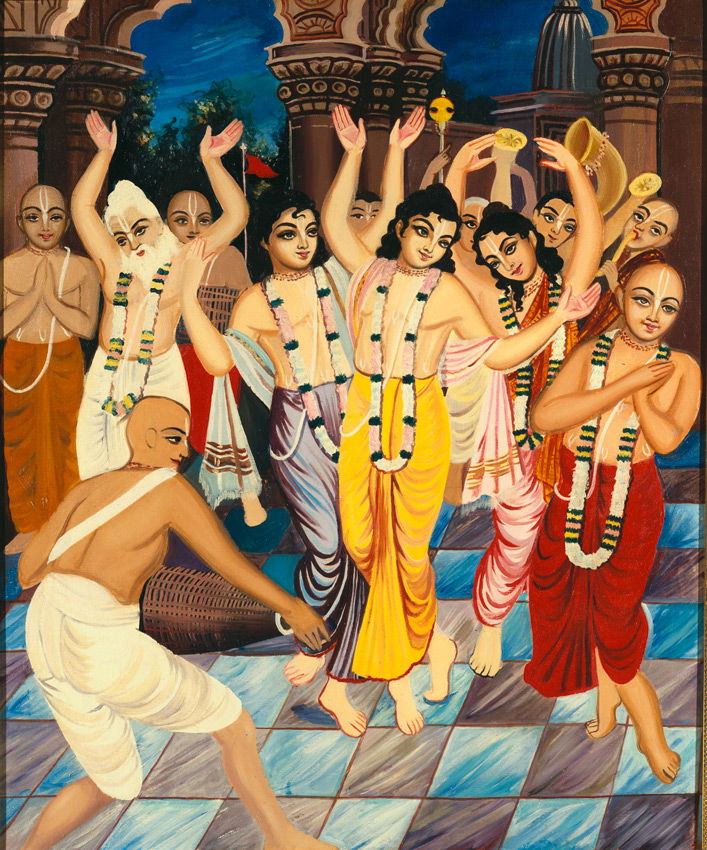 dance.
Now, He was thinking, “What to do?” He also thought, “The whole world is doing bhakti, but only vaidhī-bhakti. No one knows about spontaneous bhakti (rāgānugā-bhakti). They don’t know anything. They only do arcana by aiśvarya-mārga (in an opulent way) to Nārāyaṇa and others. Even if they do worship or meditate on Kṛṣṇa, they do it only by vaidhī-bhakti. What should I do?” Then, He came in the form of Caitanya Mahāprabhu.
There were so many reasons for the descent of Śrī Caitanya Mahāprabhu. Some of these reasons were to preach rāgānugā-mārga, and to taste Himself the highest class of madhura-rasa, upapati-bhāva, parakīyā-bhāva (paramour mood). But that thing cannot be given to anyone. This purpose was His own:
śrī-rādhāyāḥ praṇaya-mahimā kīdṛśo vānayaivā-
svādyo yenādbhuta-madhurimā kīdṛśo vā madīyaḥ
saukhyaṁ cāsyā mad-anubhavataḥ kīdṛśaṁ veti lobhāt
tad-bhāvāḍhyaḥ samajani śacī-garbha-sindhau harīnduḥ
Śrī Caitanya-caritāmṛta (Ādi-līlā 1.6)
[“Desiring to understand the glory of Rādhārāṇī’s love, the wonderful qualities in Him that She alone relishes through Her love, and the happiness She feels when She realises the sweetness of His love, the Supreme Lord Hari, richly endowed with Her emotions, appeared from the womb of Śrīmatī Śacī-devī, as the moon appeared from the ocean.”]
Kṛṣṇa and His associates, who are manifestations of Kṛṣṇa, descend to this world. But especially for Caitanya Mahāprabhu, His object was not only to preach prema-nāma (the chanting of the holy name). This was not His object; this was external. As for Svāmījī, I have said that what nagara-saṅkīrtana was being performed and what he did was only external. Try to understand. If it was not external and it was internal, then why are those who were doing so much preaching here and there throughout the world and who had thousands of disciples, why did they leave it?
They even turned against their guru. Now they are eating meat, eggs, and smoking. Some bogus persons also left this world. Why did it happen? So, this is not internal or primary. If there is love and affection, if there is some taste, and you are performing nāma-kīrtana, then it is good. But only performing kīrtana, nagara-saṅkīrtana, is not sufficient. We should do it, but very carefully. Our internal mood should be with love and affection. Without love and affection, merely performing kīrtana to show others is not sufficient.
Sometimes we take our chanting beads in this way, only to show others. Then, when we return to our home, nothing, no chanting. This is not good. Svāmījī did not come only for this. He came for the same reason and with the same object as Caitanya Mahāprabhu. What is that? To give a new thing, and that was rādhā-dāsyam in upapati-bhāva, paramour mood — very important. This has been very clearly stated in the Śrī Caitanya-caritāmṛta, Adi-līlā, fourth chapter. Nāma-saṅkīrtana can be preached even by the yuga-avatāra. Viṣṇu can do it because His duty is to protect the yuga-dharma.
Caitanya Mahāprabhu is not a yuga-avatāra or guṇa-avatāra or any avatāra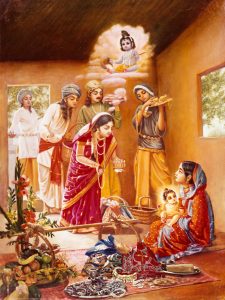 (incarnation). He is avatārī (the root of all avatāras), Kṛṣṇa Himself, having the beauty of Rādhikā and the intrinsic mood of Rādhikā and Kṛṣṇa both (combined). Therefore, He is more important than even Rādhā and Kṛṣṇa. He gave that thing to this world. How did He come? At the time of a lunar eclipse, all were singing and chanting, “Haribol! Haribol! Haribol!”
Mahāprabhu would always weep, but anyone who came clapping and chanting, “Haribol! Haribol,” would make Him smile or begin laughing. But when no one was chanting, He would begin weeping again. Thus, the whole day and night, someone was always engaged at all times to clap and to sing harināma, “Hare Kṛṣṇa Hare Kṛṣṇa Kṛṣṇa Kṛṣṇa Hare Hare Hare Rāma Hare Rāma Rāma Rāma Hare Hare,” or “Haribol Haribol,” or “Hari haraye namaḥ kṛṣṇa yādavāya namaḥ.” Like this, everyone was singing.
Mother Śacī-devī had previously given birth to so many children, but they 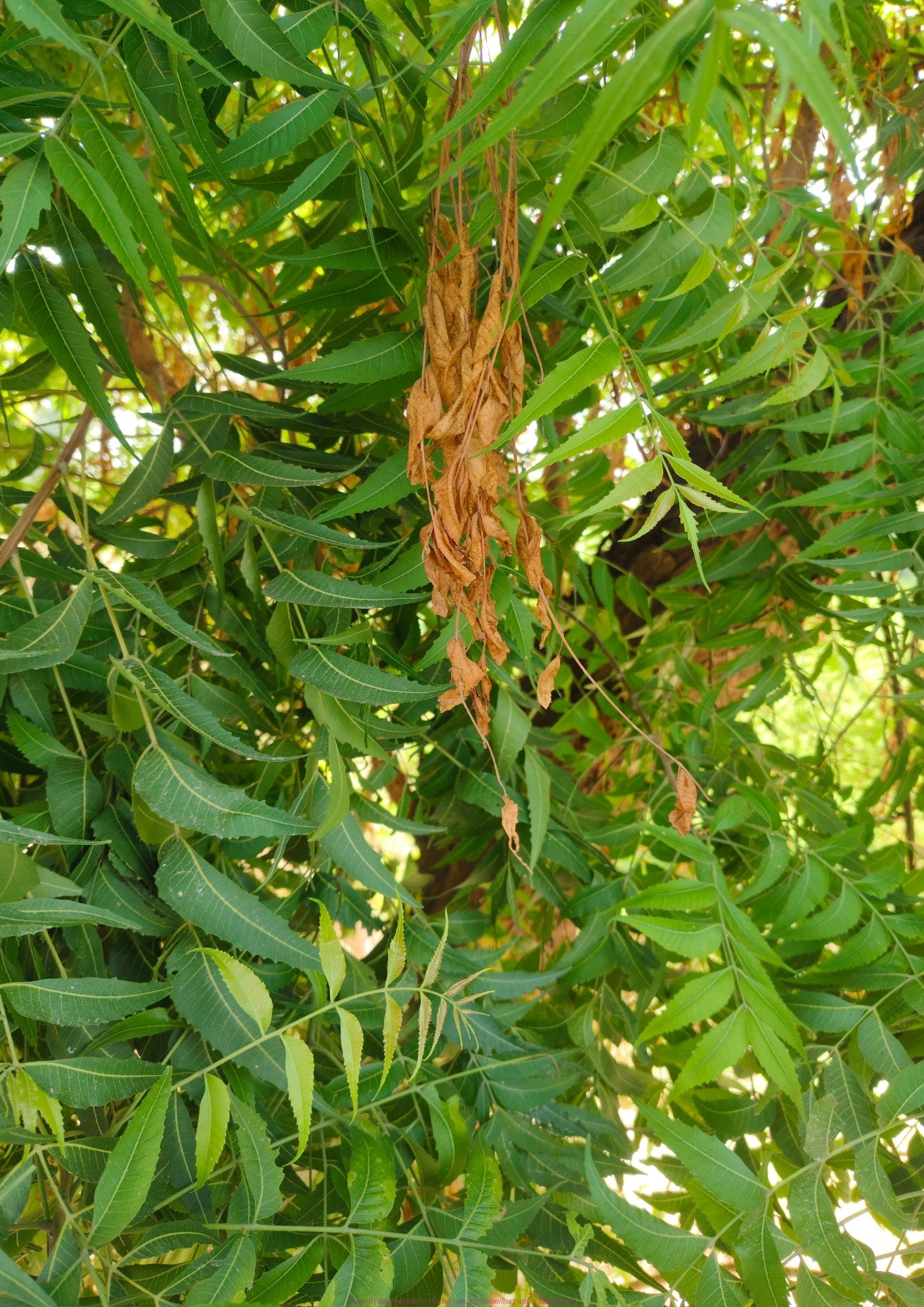 had all died. Only Viśvarūpa was left, and this boy as well. This boy was most beautiful, so she feared, “One day Yama may come and take this boy,” so she gave Him the name Nimāi because a nimba tree is very bitter, very bitter. The nimba tree is very bitter, so she gave Him the name Nimāi. But He was gaurāṅga (having a golden colour) from the beginning. Out of love, everyone used to call Him, “Gaurāṅga, Gaurāṅga, Gaura, Gaura, Gaura, Gaurasundara,” like this.
Gradually, He became like a small boy, and He used to play with cobras. Śacī Mā, Jagannātha Miśra, and all the neighbours used to become so afraid. They used to remember Nṛsiṁhadeva, Garuḍa, Kāliya-damana Kṛṣṇa, or so many things. Like this, He was playing very sweet pastimes in boyhood.
Now, He became a young boy, and He used to go to the school of Advaita Ācārya. Advaita Ācārya was a very high-class learned person, and he was almost a vairāgī (renunciant). He had no attachment to anyone in the whole world. He had only attachment to Kṛṣṇa. But when he used to see this boy like this, in a dancing mood and calling His brother, “Viśvarūpa Bhaiyā, you should come,” then Advaita Ācārya used to think, “Who is this very beautiful boy? Who is this?” Though Advaita Ācārya was Mahā-Viṣṇu Himself, still, that boy used to attract him. Then he used to think, “Who is this boy, looking in such a way?”
At that very age, Nimāi said, “You brought Me from there, from Goloka  Vṛndāvana. You called Me here with tulasī leaves and gaṅgā-jala (water from the Ganges).” This is the highest process to call Kṛṣṇa. He will not be attracted unless you give tulasī and water from the Ganges.
Advaita Ācārya offered these things, and he was crying and weeping, “If You are not coming, I will destroy the whole universe. No one can give the love and affection of Kṛṣṇa to these living entities, so please come.”
Nimāi said, “Now the Supreme Lord Kṛṣṇa has come. One day you will realise Me, who I am. You have brought Me, but you are not realising this.”
Sometimes Nimāi would play with the boys in the Ganges, jumping here and there and taking a bath. So many very old brāhmaṇas would be there, very old, very learned persons. They used to take a bath in the Ganges and, with their sacred thread in hand, chant their gāyatrī mantras like this. How? They would chant their mantras, but not with their minds. Their minds would wander here and there. At that time, Nimāi used to take some water from the Ganges in His mouth and spit it on them.
Then they used to think, “Oh, He has contaminated us!” Then again, they used to take a bath.
Mahāprabhu then said, “Now you are more pure from the Ganges water coming from My mouth. Where does the Ganges come from? My feet. But this water I am spitting on you is coming from My mouth, so mouth water is more pure than foot water.” But they did not understand.
Sometimes, He used to joke with beautiful, young teenage girls, “You should  give your paraphernalia for worship — banana, sandeśa, sweets, and other very high-class things to Me. If you are not giving them to Me, then I will curse you. You should know that the Gaṅgā is My wife. If I am happy and pleased, then Gaṅgā will be pleased. Otherwise, if I am not pleased, then Gaṅgā will not be pleased. Thus, you should give all the offerings to Me. If you are not giving them to Me, then I will give you a curse that you should be the seventh co-wife among hundreds of co-wives, and your husband will be very ugly, old, with teeth outside his mouth like this. He will also be very rough and have so much anger.” Then, out of fear, they used to give all their offerings to this boy.
Like this, Nimāi was playing so many pastimes. They have been written in the Caitanya-bhāgavata, and the rest in the Caitanya-caritāmṛta or the Caitanya-caritra by Kavi Karṇapūra. So many beautiful pastimes are there. Anyhow, He married Lakṣmīpriyā and then went to East Bengal to preach. All were attracted to His bhāgavata-kathā. At that time, Tapana Miśra (a very high-class devotee) came. He wanted to know, “What is the sadhya and sādhana of life? What is the sadhya (goal), and what is the process of life that someone can be happy in this world?”
We know that no one is happy in this world. Those who took shelter at the lotus feet of Śrīla Bhaktivedānta Svāmī Mahārāja, their gurudeva, wanted to be happy. But they could not be happy when he left this world. When he was in this world, all were happy. Their minds and everything were engaged. But when he left this world, what happened? They could not be happy. They thought, “We should try to return and marry,” and they did so. Some went to universities to get diplomas, but they are not very high-class. Some returned to do business and make a lot of money. They did all these things, but still they were not happy.
So many persons were sons and daughters of very highly wealthy persons, and when Svāmījī was in this world, they left all these things. But after his departure, they all became unhappy. If they had strictly followed his principles and been in high-class association, they would never have left, I know. I know so many disciples of Śrīla Bhaktivedānta Svāmī Mahārāja sitting here, so many. At that time, they were brahmacārīs, energetic, preaching here and there. They were risking their lives.
At that time, they had no bad desires or worldly desires. Wives and ladies were not what they were interested in then. But when Svāmījī disappeared, darkness came, and all became weaker and weaker. All the senior devotees who are here in family life were brahmacārīs at that time, but they grew weak and married. But I know they are not happy. They can be happy only by following the instructions of their gurudeva. That is why he came and why he sent me as well.
Here, you should also know that Caitanya Mahāprabhu was preaching 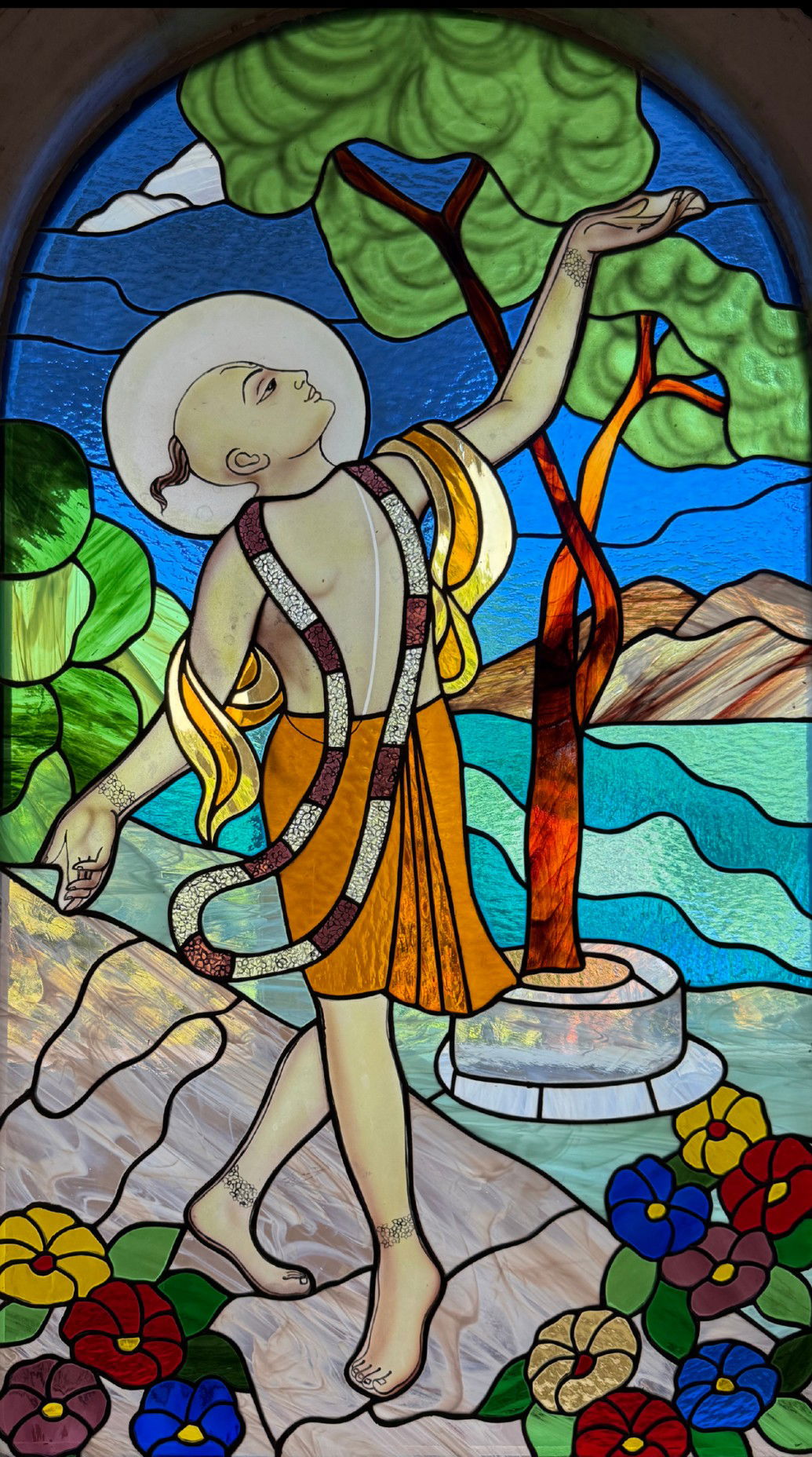 everywhere at that time. Anyway, He was enacting His sweet pastimes, and the sweet pastimes that He performed in Navadvīpa are superior to the līlās (pastimes) of Jagannātha Purī in that cave (Gambhīrā), and the pastimes on the bank of Godāvarī. But you will have to know these things. Why? So many people have doubts, but when they come to me and associate with me, their doubts disappear.
Navadvīpa may be called gupta (hidden) Vṛndāvana. Navadvīpa is the same as Vṛndāvana. Dvārakā cannot be called Vṛndāvana, never. It has not been written anywhere that Jagannātha Purī is Vṛndāvana, or that Godāvarī is Vṛndāvana. Only Navadvīpa is Vṛndāvana. In the nine islands of Navadvīpa, all the twelve forests of Vṛndāvana are there. It has been said that Jagannātha Purī is Dvārakā Purī, not Vṛndāvana.
In the gaura-mantra also, it is said, “klīṁ viśvambharāya dhīmahi, gauraḥ pracodayāt.” This mantra is not for Jagannātha Purī or Godāvarī. It is a mantra of where? Navadvīpa-dhāma. The Gaura and Viśvambhara names are not sannyāsa names. After sannyāsa, Caitanya Mahāprabhu went to Jagannātha Purī. Thus, viśvambhara-līlā and gaura-līlā are not there in Jagannātha Purī. Kṛṣṇa Caitanya was a sannyāsī, and His name in Jagannātha Purī is a sannyāsī name. He played the role of always being a sannyāsī. That is why this navadvīpa-līlā is sweeter and higher than even Purī-līlā and other līlās.
After that, He returned and entered a second marriage because His first wife, Lakṣmīpriyā-devī, could not tolerate His separation and left her body when Caitanya Mahāprabhu went to East Bengal. Afterwards, Caitanya Mahāprabhu married Viṣṇupriyā.
Before this marriage, one paṇḍita from Kāśmīra came to Navadvīpa and challenged, “Anyone can debate with me.” Everyone feared him. They pointed out, “This boy is a student of vyākaraṇa (grammar) only. First, go and debate with Him. If you can defeat Him, then come to us.”
One day, Keśava Kāśmīrī went to Nimāi Paṇḍita in the evening, when the sun was setting. Reddish rays were coming and making the whole Ganges reddish. At that very time, Gauracandra (Nimāi Paṇḍita) was sitting with so many students. What were they doing? Discussing so much logic. This boy was a teenager, very beautiful, very wonderful, and very attractive. His pronunciation of Sanskrit and His face were so wonderful.
Though He was younger and many of His students were elderly, He attracted all. They were all there, having a conversation in Sanskrit. Keśava Kāśmīrī came there wearing a big turban, along with so many books on bullock carts and camels — so many books. He had so many hundreds of followers and students. He wanted to conquer the whole world. He thus came to Nimāi Paṇḍita on the bank of the river Ganges. The residents of Navadvīpa wanted him to first go to this boy and, if he could defeat Him, then come to them.
They were playing a trick on Keśava Kāśmīrī. This paṇḍita reached the place where Nimāi Paṇḍita was having discussions with His disciples, and he saw, “Who is this very influential boy who is sitting amid all these persons? He can cut through all the arguments of everyone. He can prove that ‘no’ means ‘yes’ and ‘yes’ means ‘no.’ ” Nimāi was very influential. Anyhow, Keśava Kāśmīrī sat near that boy, and he thought, “Who is this boy?”
Someone announced in his ear, “This is Nimāi Paṇḍita.”
“He is Nimāi Paṇḍita?” Keśava Kāśmīrī then had a palpitation and thought, “Oh, this boy is very intelligent and very qualified.” He was somewhat fearful, but still he said, “You are a very good boy. Your pronunciation and arguments are really very astonishing.”
Nimāi said, “I have heard that you are a very intelligent and very high-class learned person.”
“Yes, everyone says this.”
“I want to hear something from you.”
“What do You want to hear from me?”
“Now it is evening, and the sun is going to set. The beautiful rays of the sun are coming and playing on the waves of the Ganges. I want you to glorify the Ganges in your words, with new poems.” Keśava Kāśmīrī began to smile and at once began to compose new, new, new, new poems. He composed hundreds of poems in a very short time. Everyone was astonished. How were those poems? Very beautiful, full of ornamented language. How?
makheśvari! kriyeśvari svadheśvari sureśvari
triveda-bhāratīśvari pramāṇa-śāsaneśvari
rameśvari! kṣameśvari pramoda-kānaneśvari
vrajeśvari vrajādhipe śrī rādhike namo ’stu te
Śrī Rādhā-kṛpā-kaṭākṣa-stava-rāja (12)
[“O mistress of all kinds of sacrifices, of all activities, of the mantras uttered during yajña, of all the gods, of the teachings of the three Vedas, of the enforcement of all scriptural principles, of the goddess of fortune, of forgiveness, and of the delightful forest (of Vṛndāvana), O mistress and empress of Vraja, O Śrīmatī Rādhikā, I offer my praṇāma unto You.”]
This is all what? “Īśvarī, Īśvarī, Īśvarī,” very good and ornamented language. So, everyone became astonished upon hearing the poems of Keśava Kāśmīrī and thought, “Such high-class poems!” He was reading the faces of the audience, and now he became somewhat proud (puffed up), “I am something now. I have attracted all the boys now.”
Mahāprabhu said very humbly, very humbly, “I want you to praise the special qualities and faults in your poems. You should glorify your new poems. What are the qualities and faults in your poems?”
Keśava Kāśmīrī then said, “I have no wrong things in my poems, never and never. I cannot say what is wrong. All my poems are perfect, having only good qualities. What śloka do You want to hear? I have recited hundreds of ślokas. You should utter what śloka You want to hear.”
Mahāprabhu immediately recited one śloka from among the quite newly composed ślokas. That very śloka, among hundreds of new ślokas, was from the middle. Nimāi recited this one śloka, and upon hearing it, all the boys were astonished. Even Keśava Kāśmīrī also thought, “How did You remember this śloka, which was quite newly composed? Even I don’t remember all the ślokas that I recited, but how are You doing this?”
“If by the grace of Sarasvatī someone can compose thousands of ślokas in a very short time, then by the grace of that same Sarasvatī, someone can be a śruti-dhara (person who can hear something once and remember it forever), like this.”
Keśava Kāśmīrī became somewhat sad and thought, “What an extraordinary boy!”
Nimāi said, You should tell Me the qualities and faults of your poems.”
“In my new poems, there can be nothing wrong. Everything is perfect and correct.”
Mahāprabhu humbly said, “May I say something?”
“Why not? You can speak.” Then Mahāprabhu showed five qualities and faults of a śloka and said, “I can discover thousands of qualities and thousands more faults.” Then Keśava Kāśmīrī could not speak. Mahāprabhu then began pointing out the right and wrong aspects in his poems, and Keśava Kāśmīrī could not respond. All began to clap, but Mahāprabhu said, “Don’t clap; give respect.” He then told him, “Now you are 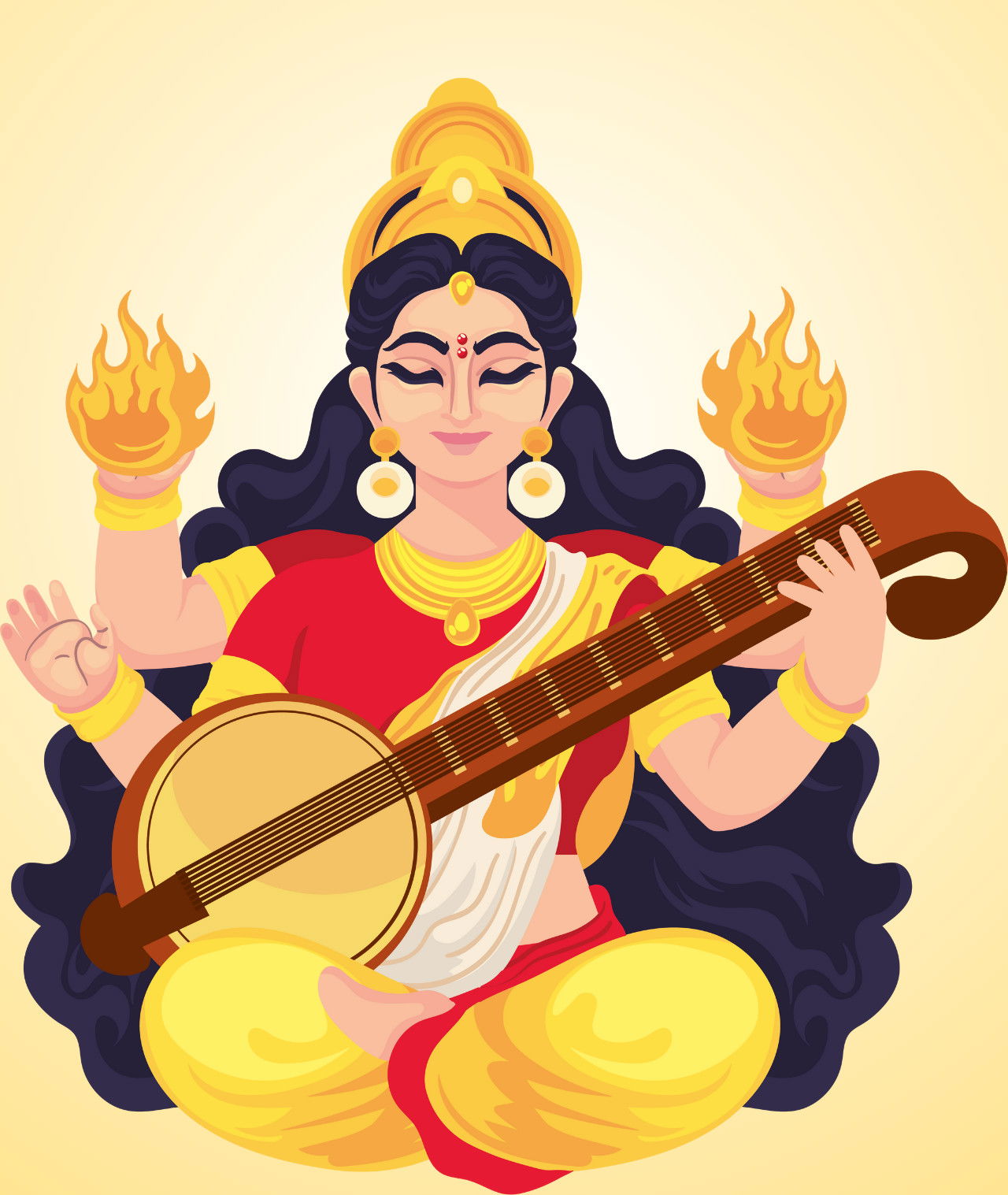 tired. You should go and rest, and tomorrow we will meet again.”
That night, Keśava Kāśmīrī had a dream. He was thinking, “O Devī, I have been defeated only by a very young vyākaraṇa (grammar) boy. If I had been defeated by a very high-class learned person, there would be no lamentation. But I have been defeated only by a young boy, who is not even learned. He is a primary student of vyākaraṇa, and still I have been defeated.”
Then Devī came and told him in his dream, “Don’t be upset. He is my husband. He is the Lord of Lords Himself. You are very fortunate to have received His darśana. Go at once and beg pardon, and do as He instructs.” At once, early in the morning, he went and apologised. How? By offering full daṇḍavat praṇāma.
Mahāprabhu told him, “This is not the fruit of learning. In learning anything through education, one should be very humble, like:
tṛṇād api su-nīcena
taror iva sahiṣṇunā
amāninā māna-dena
kīrtanīyaḥ sadā hariḥ
Śrī Caitanya-caritāmṛta (Ādi-līlā 17.31)
[“One who thinks himself lower than the grass, who is more tolerant than a tree, and who does not expect personal honour yet is always prepared to give all respect to others can very easily always chant the holy name of the Lord.”]
If anyone has some pride in learning, ‘Now I am a very big, high-class learned person,’ this is bogus. He should be very polite, and he should try to chant and meditate on Kṛṣṇa. This is the fruit of knowledge.”
sei se vidyāra phala jāniha niścaya
kṛṣṇa-pāda-padme yadi citta-vitta raya
Caitanya-bhāgavata (Ādi-khaṇḍa 13.178)
[“Know without doubt that the goal of knowledge is to fix one’s mind on Kṛṣṇa’s lotus feet.”]
“If there is bhakti, love and affection for Kṛṣṇa, this is the fruit of all kinds of learning. And if anyone is not attaining such a high class of love and affection for the lotus feet of Kṛṣṇa, really, he is a very wretched person. At once, you should go and chant and remember, ‘Hare Kṛṣṇa Hare Kṛṣṇa Kṛṣṇa Kṛṣṇa Hare Hare Hare Rāma Hare Rāma Rāma Rāma Hare Hare.’ ” Now he was fully satisfied. He took shelter at the lotus feet of Gauracandra, and he went to Vṛndāvana or anywhere. These are Mahāprabhu’s very sweet pastimes.
After He was married a second time, He went to Gayā. There were so many students at His school, and then He went to Gayā. Why did He go to Gayā? To perform some oblations to His father. In India, it is traditional for one to go to Gayā and perform ritualistic activities for one’s father upon his death. Then one’s father’s life will be good. He will be removed from a sinful or inauspicious situation, and he will be happy. Nimāi Paṇḍita went to Gayā for this reason.
He took a bath in the river there (Karmanasa). What is the meaning of karma-nāśa? By taking a bath there, all fruitive karma will disappear. Nimāi Paṇḍita took a bath there and offered oblations to His father. Then He saw a very exalted, pure, high-class devotee there. He was chanting the holy name with tears in his eyes. He had inherited so many good qualities and a mood from his guru, and thus he was chanting like:
he deva! he dayita! he bhuvanaika-bandho!
he kṛṣṇa! he capala! he karuṇaika-sindho!
he nātha! he ramaṇa! he nayanābhirāma!
hā hā kadā nu bhavitāsi padaṁ dṛśor me
Kṛṣṇa-karṇāmṛta (40)
[“O Lord! O dearest one! O only friend of the three worlds! O Kṛṣṇa ! O restless one! O only ocean of compassion! O Deva! O lover (ramaṇa )! O You who delight the eyes! Oh! When will You again be visible to My eyes? When will I receive Your darśana?”]
ayi dīna-dayārdra nātha he
mathurā-nātha kadāvalokyase
hṛdayaṁ tvad-aloka-kātaraṁ
dayita bhrāmyati kiṁ karomy aham
Caitanya-caritāmṛta (Madhya-līlā 4.197)
[“O My Lord! O most merciful master! O master of Mathurā! When shall I see You again? Because of My not seeing You, My agitated heart has become unsteady. O most beloved one, what shall I do now?”]
“O Kṛṣṇa, where have You gone?” He was uttering this and weeping, heart melting, rolling down on the earth, “O Kṛṣṇa, where are You? You left us and went to Mathurā. Now You are not remembering us. Now You are playing with the Yādavas and the wives of the Yādavas. So many are there. Now You have forgotten us. We are dying in Your separation.” He was reciting heart-melting poems and weeping.
Nimāi saw him and became very happy and satisfied. “Now My life is successful. I came only to pay My respects to My father according to the Indian Vedic tradition, but it was not sufficient. To whomever I give that oblation, only he will benefit. But by attaining good association, not only will one’s life be successful, but one’s whole dynasty will benefit. The whole world can benefit from that high-class association.”
For example, Svāmījī (Śrīla Prabhupāda) appeared, and how many people benefited from that? Millions and millions. This is high-class association. Why are you coming to me? In Holland, over six hundred persons, about one thousand in one day, were assembled there, and all were very happy and satisfied. Why? This is the fruit of high-class association — all will be attracted. Not only humans but also animals can be attracted. We have seen this in the life of Caitanya Mahāprabhu.
That is why sādhu-saṅga, sādhu-saṅga, sādhu-saṅga is needed. Without sādhu-saṅga, you will be weak, as you are weak now. I know, I wanted to read your pulse. I read your pulse and saw, “Oh, you badly need association.” Svāmījī managed for me to come for that reason. We should always be in sādhu-saṅga, always. But what is sādhu-saṅga? What is sādhu-saṅga? The sādhus, who are superior to you, can help you. If everyone is junior to you, if no devotees are there who are more advanced than you, oh, this is not called association.
That sādhu should be superior to you, and he must be like-minded and very affectionate 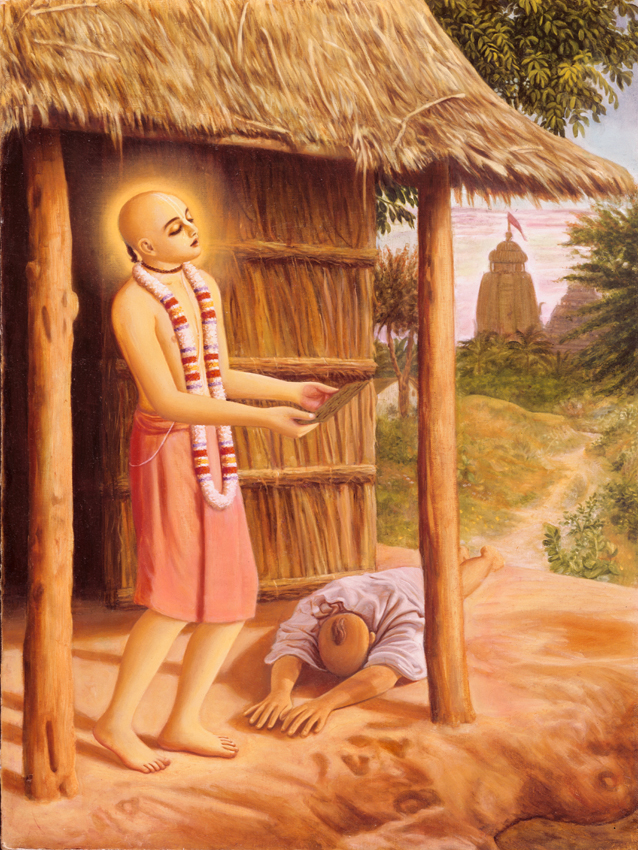 to you. Rūpa Gosvāmī has said: sajātīyāśaye snigdhe sādhau saṅgaḥ svato vare — one should associate with the devotees who are more advanced than oneself and who are endowed with a similar type of affection for the Lord (Caitanya-caritāmṛta, Madhya-līlā 22.131).
He should be very soft-hearted and affectionate towards you. And he should have the same object that you have, but he should be more advanced than you. This is called association. If there is no guru like that, no high-class Vaiṣṇava like that, and you are only associating with yourself, then you will be weak, and you will be bewildered.
Mahāprabhu said, “I have seen you, Prabhu (Īśvara Purīpāda). I have offered everything, My senses, body, mind, soul, and everything at your lotus feet. Now I am yours, not mine. Please be merciful to Me, and what is good, you should do for Me.” This should be the idea of any disciple who is going to be initiated. If you are going and you have no faith in gurudeva, not very strong faith, then gurudeva cannot do anything. Even Kṛṣṇa cannot do anything, what to speak of a general guru. So Caitanya Mahāprabhu said, “I have offered everything at your lotus feet. Now, whatever do you think is better, do for Me.”
saṁsāra-samudra haite uddhāraha more
ei āmi deha samarpilāṅa tomāre
‘kṛṣṇa-pāda-padmera amṛta-rasa pāna
āmāre karāo tumi’ — ei cāhi dāna
Caitanya-bhāgavata (Ādi-khaṇḍa 17.54–55)
[“O Gurudeva, I have surrendered My body and everything that is Mine at your lotus feet. I shall follow your every instruction. My only wish is to receive your merciful benediction by which you kindly make Me drink the transcendental nectar of Śrī Kṛṣṇa’s lotus feet.”]
“You are qualified, and you should give Me a cup of the nectar of kṛṣṇa-bhakti.” And what did His guru do? He embraced Him, “I am very satisfied that now I have a disciple like You,” and, in His ear, he spoke two things: the mahā-mantra (Hare Kṛṣṇa mantra) and the gopāla-mantra. First, this Hare Kṛṣṇa mantra should be given to disciples. Then, after some time, when one is a bona fide devotee, then this second initiation of gopāla-mantra and all other mantras should be given.
At first, only the gopāla-mantra or kāma-gāyatrī was given, nothing else. There were not ten, nine, or eight mantras given. But gradually our guru-paramparā saw, “They cannot do so with only this mantra; more mantras should be given.” That is why, for their advancement, they quickly gave more mantras, such as the guru-mantra, guru-gāyatrī, gaura-mantra, gaura-gāyatrī, then kṛṣṇa-mantra, kāma-gāyatrī, then pañca-tattva, and mahā-mantra. But at first, Kṛṣṇa gave Brahmā the gopāla-mantra through Sarasvatī. Then, after that, Kṛṣṇa Himself gave kāma-gāyatrī to Brahmā through His flute. All other mantras are included in this mantra.
Thus, Īśvara Purīpāda gave the mahā-mantra and then the gopāla-mantra to Nimāi, and He began to chant. But what happened afterwards? I will say tomorrow what the result was.
Now Caitanya Mahāprabhu returned to Navadvīpa. He wanted to teach His students, but He could not. Now, He was so absorbed in chanting and performing kīrtana that He Himself rolled down on the earth, weeping. When He used to open the book, He saw Kṛṣṇa everywhere: here Kṛṣṇa, there Kṛṣṇa, here Kṛṣṇa. In the book, Kṛṣṇa was there; in all the letters, Kṛṣṇa was there — everything was like Kṛṣṇa. The students used to come to Him, and He would begin to weep and say only, “Oh, I cannot teach now, I cannot.”
Then they went to His gurudeva Gaṅgādāsa Paṇḍita and complained, “We took shelter of Nimāi Paṇḍita, but now He is not teaching us. Please order Him that He should teach us.” One day, he came and asked Mahāprabhu, “Why are You not teaching them? You should teach them vyākaraṇa.”
“Yes, I will obey you.” But when He went again to teach them, He finally decided to close the book with ropes; “I cannot check My mood.” He began weeping, “O Kṛṣṇa, where are You? Where are You? Where are You? Where is Vṛndāvana? Where is Kālindī? Where is Govardhana? I cannot teach you. You should go to other teachers.” They said, “We cannot go. Whatever You do, we will follow.”
“Then all of you should also bind your books with ropes and come with Me and chant:
(hari) haraye namaḥ kṛṣṇa yādavāya namaḥ
yādavāya mādhavāya keśavāya namaḥ
(Hari) Haraye Namaḥ Kṛṣṇa (1)
[“I offer praṇāma unto You, O Hari, O Kṛṣṇa, O Yādava, O Mādhava, O Keśava!”]
gopāla govinda rāma śrī madhusūdana
giridhārī gopīnātha madana-mohana
(Hari) Haraye Namaḥ Kṛṣṇa (2)
[“O Gopāla, Govinda, Rāma, Śrī Madhusūdana! O Giridhārī, Gopīnātha, Madana-mohana!”]
Haribol! Haribol!”
Devotees: Haribol! Haribol!
Śrīla Bhaktivedānta Nārāyaṇa Mahārāja: Haribol! Haribol!
Devotees: Haribol! Haribol!
Source(s): Purebhakti.com, Serve Love – Bhakta Bandhav (Bhakta Bandhav Anthology transcribed and edited by the Bhakta Bandhav Team)
Image(s) made possible by Pixabay.com, Krishnapath.org.in, Keystone Press / Alamy Stock Photo and / or Bhaktiart.net
Unless indicated otherwise, all verse translations and quotes are from the books by Śrīla Prabhupāda (Vedabase.com)